 zh-CN

Nov 27-2018
Gelatin Has Unique Properties
READ MORE >
Gelatin is commonly found in gummies, marshmallows, yogurt, and capsules. But not all gelatin meets kosher dietary requirements. Many consumers and brand owners have the same questions: What is kosher gelatin? How can you confirm that it is authentic? The answer comes down to three things: source, supervision, and certification symbol, also known as the 3S principle.
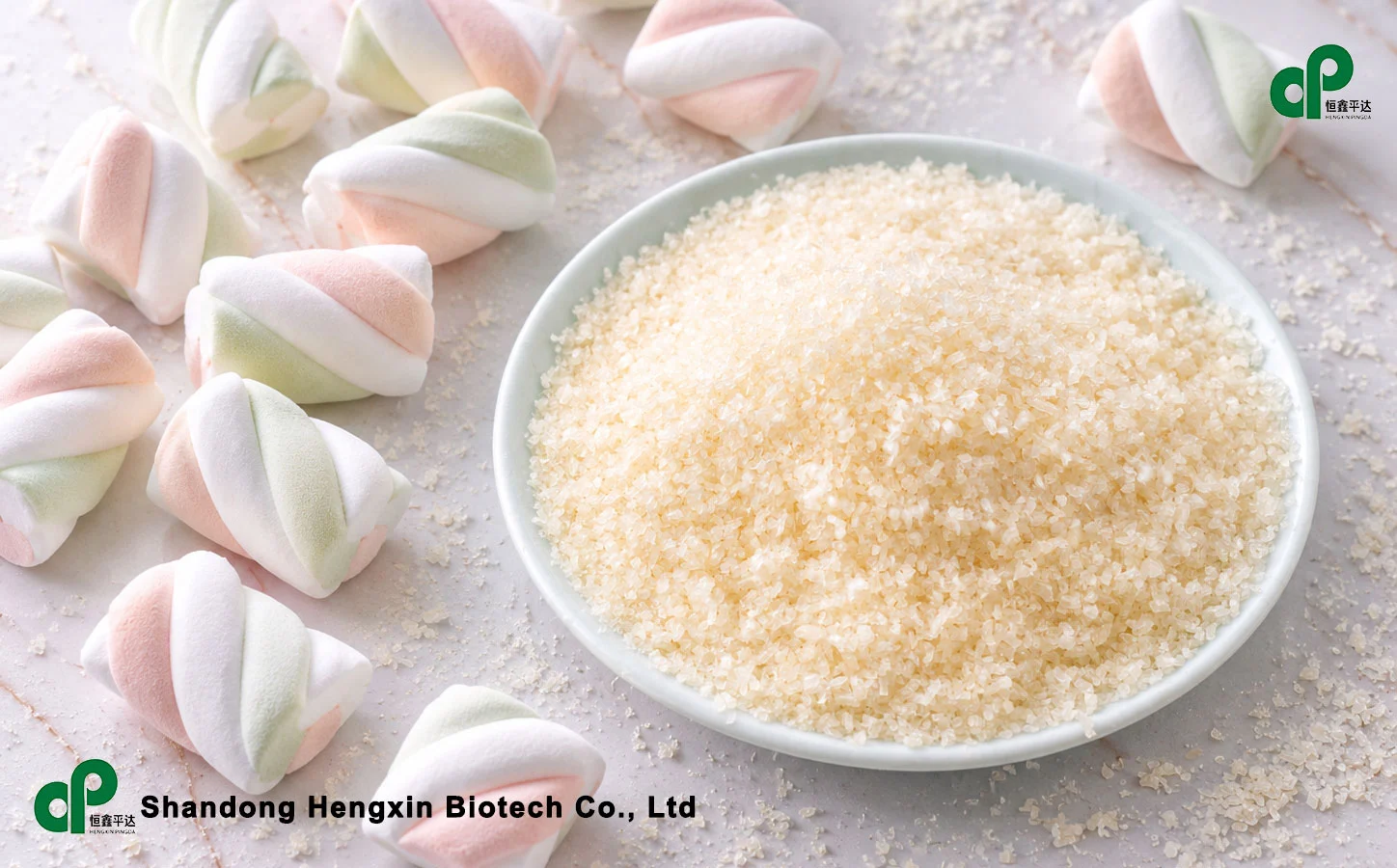
Below, we take a closer look at the sources of kosher gelatin, debates over certification, and how to choose and buy it.
Gelatin is a protein derived from collagen in animal skins, tissues, and bones. It dissolves in warm water and forms a gel as it cools. Kosher gelatin has all these properties and also meets the requirements of Jewish dietary law, known as kashrut.
Major certification agencies, such as OU and OK, require gelatin to come from animals permitted under Jewish dietary law and to be produced under compliant controls. Their reviews cover raw materials, processing aids, equipment, and production procedures. A blessing from a rabbi alone does not make gelatin kosher-certified.
Kosher gelatin has two main raw material sources. Bovine hides are the most common, and fish is the second option.
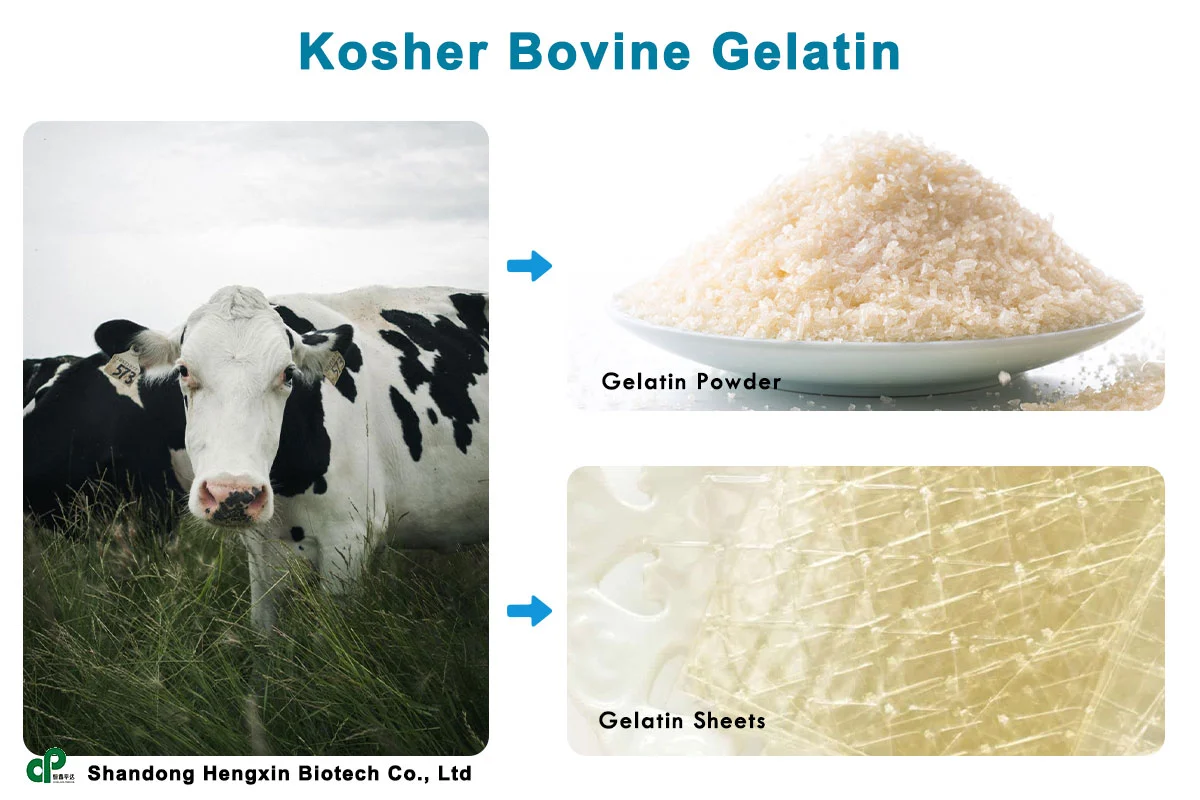
Bovine hide gelatin is extracted from the collagen in cattle hides. Under the applicable rules, the cattle must belong to a species permitted by Jewish dietary law and must be slaughtered according to that law. Production and storage must strictly follow kosher requirements. This gelatin can be used to make candy, desserts, and capsule shells. Be sure to confirm which animal tissue is used: "bovine gelatin" can refer to gelatin from either cattle hides or cattle bones. Gelatin production from hides is currently more widespread than production from crushed bones, and hide-derived gelatin is the first choice for many brands.
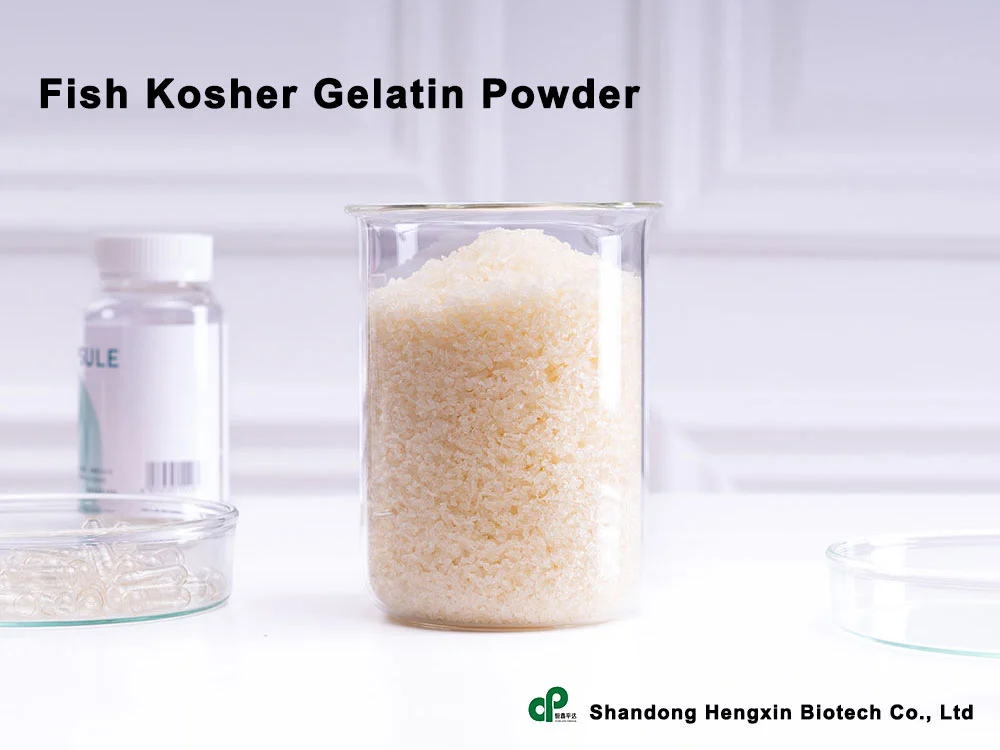
Kosher fish gelatin comes from permitted fish species that have fins and scales. Manufacturers typically use an acid process to produce gelatin powder from fish skins and scales. Fish gelatin is popular and is usually classified as pareve, meaning neither meat nor dairy. It is also suitable for people who avoid beef for other reasons. Under the same conditions, fish gelatin generally has a lower gel strength and a lower melting point than bovine gelatin. If your recipe requires high gel strength and a high melting point, bovine gelatin is the best choice.
Jewish dietary law prohibits pork. Leading certification agencies, including OU and OK, do not accept pork-derived gelatin as kosher. Under their standards, porcine gelatin remains unacceptable even after chemical processing. A large share of gelatin worldwide is made from pigskin, so this deserves attention. Buyers should never assume a product is compliant. They must verify its raw material source and certification documents. To learn more about pork-derived materials entering the supply chain, read our guide: Does Kosher Gelatin Contain Pork?
No. Kosher gelatin is animal-derived, so it is neither vegetarian nor vegan. "Kosher" means that a product meets religious dietary requirements; it does not mean plant-based. Vegetarians and vegans should choose plant-based gelling agents, such as agar, pectin, or carrageenan.
Kosher gelatin follows the basic gelatin manufacturing process. The difference lies in supervision and controls:
Raw material selection: Use only kosher-compliant hides or fish materials.
Washing: Rinse the raw materials to remove dirt and impurities.
Pretreatment: Use compliant acids or alkalis to soften the collagen.
Extraction: Use hot water to extract gelatin from the treated materials.
Filtration and concentration: Filter and thicken the gelatin solution.
Sterilization and drying: Use high temperatures to eliminate microorganisms and remove moisture.
Grinding and sieving: Grind the dried gelatin to the target particle size.
Packaging and labeling: Print the kosher certification symbol on the packaging.
A kosher supervisor, known in Hebrew as a mashgiach, oversees the entire production process. The supervisor checks raw materials, chemicals, and production equipment. All processing aids must also meet kosher standards.
The finished products may look the same. The key differences lie in production and verification.
Comparison | Kosher Gelatin | Regular Gelatin |
Raw material source | Hides from kosher-slaughtered cattle or kosher-compliant fish | Often pork-derived or made from mixed sources |
Supervision | Supervised by an authority on Jewish dietary law | Generally no religious supervision |
Processing aids | Must meet kosher requirements | No kosher requirements |
Production equipment | Equipment is kosher or has been thoroughly cleaned | Shared production lines are common |
Documentation | Kosher certificate | Standard quality documents |
Regular gelatin can fully meet food safety standards even though it is not produced according to religious dietary rules. For buyers who need to follow kosher requirements, this is a decisive difference.
As discussed above, kosher gelatin production involves chemical reactions. This leads to the central debate about gelatin: If extensive processing completely transforms a non-kosher raw material, does it remain prohibited? Religious scholars hold two different views:
The strict view: The Orthodox Union (OU) holds that gelatin derived from non-kosher animals remains non-kosher. Rav Moshe Feinstein reasoned that the material becomes temporarily inedible, but its ultimate purpose is still to become food. It therefore never loses its status as food. Both Star-K and the Orthodox Union consider pork-derived gelatin never to be kosher.
The processing-based view: Some certification agencies take the opposite position. Some rabbis argue that, during processing, the hides and bones become so inedible that even a dog would not eat them. At that point, the material is no longer considered food. Under this reasoning, restrictions on the raw material source are much less strict.
Neither position represents "fake certification." They follow different rulings under Jewish law. This is why the certification symbol matters so much. A kosher symbol is meaningful only if the consumer accepts the certifying agency.
A second, separate debate about kosher gelatin powder concerns its classification. Jewish dietary law divides food into meat, dairy, and pareve. Meat and dairy cannot be eaten together, while pareve foods can be eaten with either.
Fish gelatin is generally considered pareve.
Bovine gelatin is more controversial. Some authorities classify it as meat. Others hold that extensive processing causes the hides to lose their meat status.
As a result, the same bovine hide gelatin may receive different labels from different certification agencies: some label it "meat," while others label it "pareve." This affects the finished product. For example, pareve yogurt and desserts must use pareve ingredients. Always check the exact designation on the certificate rather than making assumptions.
Kosher gelatin has essentially the same applications as regular gelatin, but it can reach a broader range of consumers. Most kosher gelatin on the market today is used in the food and pharmaceutical industries.
Food and Confectionery:
Gummies and jellies: Create a gel structure and a chewy texture.
Marshmallows: Stabilize the foam and maintain the shape.
Mousses and desserts: Provide structure and a smooth texture.
Certain dairy products: Thicken and stabilize formulations.
The uses listed above represent only a small share of the applications for edible gelatin. For a closer look at food safety, certification, and processing, read: Key Facts About Gelatin Additives for Candies
Pharmaceuticals: Pharmaceutical gelatin has good film-forming properties. Pharmaceutical companies often use it in hard capsules, soft capsules, tablet coatings, and other dosage forms. Pharmaceutical gelatin must meet stricter quality standards than edible gelatin. Further reading: Why Gelatin Remains the Preferred Material for Hard Capsule Manufacturing.
At Hengxin, we produce edible and pharmaceutical gelatin, with an annual output of 36,000 metric tons. Below are the specifications for our two gelatin grades:
Application | Grade | Gel Strength | Viscosity | Light Transmittance T620 | Chromium Content | Particle Size |
Edible | 100 Bloom | 100-120 Bloom | 2.2-2.5 mPa·s | ≥90% | <1.0 ppm | 8-60 mesh |
Edible | 150 Bloom | 150-170 Bloom | 2.4-4.0 mPa·s | ≥90% | <1.0 ppm | 8-60 mesh |
Edible | 180 Bloom | 180-200 Bloom | 2.5-4.5 mPa·s | ≥90% | <1.0 ppm | 8-60 mesh |
Edible | 200 Bloom | 200-210 Bloom | 2.7-4.5 mPa·s | ≥90% | <1.0 ppm | 8-60 mesh |
Edible | 220 Bloom | 220-240 Bloom | 2.8-4.5 mPa·s | ≥90% | <1.0 ppm | 8-60 mesh |
Edible | 250 Bloom | 240-260 Bloom | 3.0-4.5 mPa·s | ≥90% | <1.0 ppm | 8-60 mesh |
Edible | 270 Bloom | 270-280 Bloom | 3.1-4.5 mPa·s | ≥90% | <1.0 ppm | 8-60 mesh |
Pharmaceutical | 180 Bloom | 180-200 Bloom | 4.0-5.0 mPa·s | ≥90% | <1.0 ppm | 8-60 mesh |
Pharmaceutical | 200 Bloom | 200-210 Bloom | 4.8-5.0 mPa·s | ≥90% | <1.0 ppm | 8-60 mesh |
Pharmaceutical | 220 Bloom | 220-230 Bloom | 4.8-5.0 mPa·s | ≥90% | <1.0 ppm | 8-60 mesh |
Pharmaceutical-grade gelatin has a higher viscosity and narrower specification ranges to ensure uniform capsule shell formation. Both product categories meet the same standards for clarity and chromium content.
Most retail products indicate their source and kosher status on their clean labels. If you are unsure what to look for, the points below may help:
Look for a recognized certification symbol. Common examples include OU, OK, Star-K, KOF-K, and COR. COR and MK symbols are often seen in Canada.
Visit the certifying agency's website. Most agencies publish lists of approved products online.
Request a certificate. It should state the product name, manufacturer, and factory address.
Check the expiration date. Certificates have a validity period, so confirm that the certificate is still valid.
Verify the details. The certificate should specify whether the gelatin is meat or pareve and identify its raw material source.
Be cautious of a standalone "K." The letter K alone is not protected as a trademark and does not identify which agency backs the claim.
If you buy in bulk, ask the gelatin manufacturer for the relevant certification documents and the product certificate of analysis (COA). This information can quickly help you decide whether to continue the conversation.
Where to buy depends on who is buying. Consumers and manufacturers have different needs. For Consumers: Everyday buyers can find kosher gelatin, gelatin snacks, and collagen products at:
Online stores: Natura Market, Well.ca, Amazon, iHerb, Vitasave, and Walmart
Retail stores: Costco, Whole Foods Market, Shoppers Drug Mart, and Pharmaprix
Brand websites: Aleta Collagen, Vital Proteins, Great Lakes Wellness, Sports Research, and Organika
Stock changes often. Read each product page and look for the kosher symbol on the package or listing. If it's missing, ask the seller.
For Manufacturers and Importers: Businesses need larger volumes and full paperwork. These channels help you find suppliers:
Government sources. Canada.ca offers importer and business data that can help you find licensed importers.
Local distributors and importers. These firms hold stock in Canada and can shorten lead times.
Industry trade shows. Food and pharma events let you meet suppliers and compare samples.
Customs data. Trade records show who imports gelatin and from where.
LinkedIn. You can find sourcing managers and technical sales teams directly.
You can also go straight to a manufacturer. Hengxin is a gelatin producer with edible and pharmaceutical grades, as shown in the table above. You can reach us on Facebook, X, LinkedIn, and YouTube. Send your Bloom, viscosity, and mesh needs, and ask for the kosher documentation that fits your product.
No. Certification agencies apply different standards. Some accept hide-derived gelatin as pareve, while others classify it as meat. Choose a certifying agency that your target customers accept, and read the exact wording of the certificate carefully.
Sometimes, but not in every case. Kosher and halal dietary rules overlap, but they are not identical. Some Muslims accept kosher gelatin, while others require halal certification. Fish gelatin is often a category that both groups find easier to accept. If your product serves both groups, obtaining both certifications is recommended. Further reading: Is kosher gelatin halal?
There is no simple answer; each system has its own rules. Kosher requires Jewish supervision and separates meat from dairy. Halal has its own requirements for slaughter and raw materials. For a full comparison, read more: What Is Halal elatin?
Kosher gelatin comes from kosher-compliant bovine hides or fish, is produced under supervision and controls, and carries valid certification. It is neither vegetarian nor vegan. Pork-derived gelatin is never kosher. Details matter: always confirm the raw material source and certification symbol, and determine whether the gelatin is meat or pareve. Whether you are a consumer or a business buyer, verify the credentials before purchasing.