 zh-CN
zh-CN

Oct 05-2024
Understanding Gelatin Additives for Soft Capsules in the Biopharmaceutical Industry
READ MORE >
As a Muslim, whenever I see a product labeled "Kosher certified," there's really only one question on my mind: "Can Muslims eat this?" So, is kosher gelatin halal? It might be, but the kosher label alone does not settle the question. Kosher and halal are two separate sets of religious rules. They agree on some things, such as avoiding pork, and they split on others, such as slaughter and alcohol. Muslim scholars also hold different views about gelatin itself.
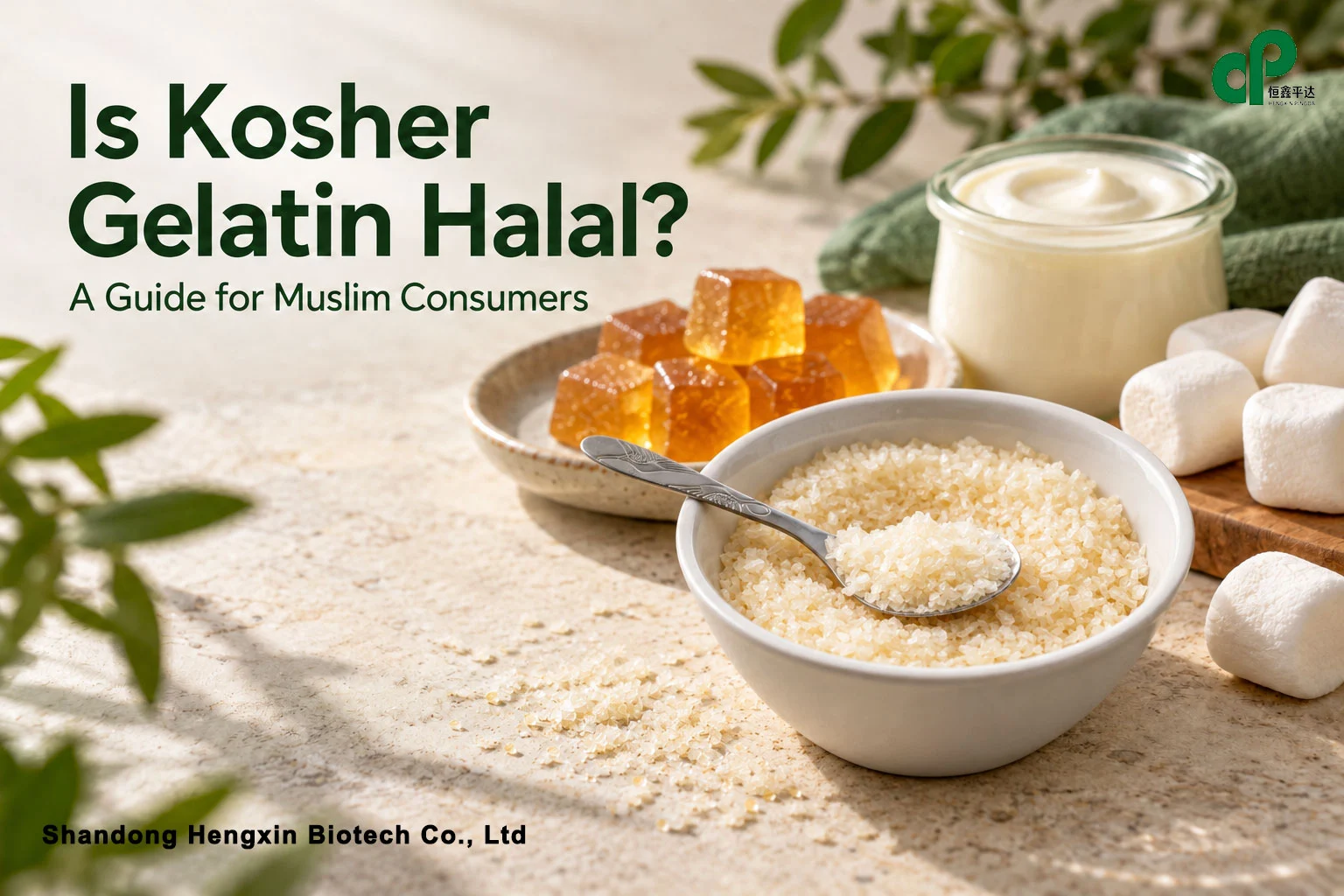
This guide starts with what "kosher" and "halal" each mean. Then it compares the two, explains why scholars disagree, and ends with practical shopping advice. To explore specifications and certifications for our complete gelatins range, please view the Hengxin Biotech Kosher Gelatin & Halal Gelatin Product Line.
"Kosher" comes from the Hebrew word kasher, which means "fit" or "proper." It describes food that follows kashrut, the Jewish dietary laws. These laws come from the Torah and have been explained by rabbis for centuries.
The main rules are easy to summarize:
Permitted animals. Land animals must chew their cud and have split hooves. Cattle, sheep, and goats qualify. Pigs do not. Fish must have fins and scales, so shellfish are out.
Special slaughter. Called shechita, it is done by a trained slaughterer using one smooth cut with a very sharp knife. The blood is then removed from the meat.
No mixing of meat and dairy. The two are kept apart, along with the dishes and tools used for them. Food with neither is called pareve.
Extra care for grape products. Wine and grape juice have their own supervision rules.
Kosher certification is how a shopper knows a product follows these rules. A rabbinic agency checks the ingredients, equipment, and process, and the package carries that agency's symbol. Agencies do not all use the same standards, and some are stricter than others.
Gelatin requires extra attention because it is extracted from animal collagen. To learn more, read our full article, "What Is Kosher Gelatin?"
"Halal" is Arabic for "permitted." Its opposite is haram, or "forbidden." Islamic dietary law draws on the Qur'an and the Sunnah, the example of the Prophet Muhammad. The starting point is that foods are permitted unless a clear text forbids them.
The Qur'an names several clear prohibitions (see Surah Al-Ma'idah 5:3). They include pork, animals that died on their own, flowing blood, and meat from animals not slaughtered in God's name. Alcohol and other intoxicants are also forbidden. For land animals, halal slaughter (zabiha) has its own steps. A Muslim slaughterer says God's name, makes a swift cut with a sharp knife, and the animal must be alive and healthy at that moment. The Qur'an also permits the food of the People of the Book (Surah 5:5). Scholars disagree on how far that verse reaches in modern food production, and this matters for our topic.
Between clear halal and clear haram sits a gray zone called mashbooh, or "doubtful." A well-known saying of the Prophet advises staying away from doubtful matters. Gelatin often lands here, because the label rarely names the animal it came from.
Halal certification is the tool that clears up doubt. Certifiers such as the American Halal Foundation, JAKIM in Malaysia, and BPJPH in Indonesia audit the whole chain: the animal source, slaughter, ingredients, equipment, and storage. One caution: in many places, including the European Union, "halal" is not legally protected, and many different seals exist. So the name of the certifier matters as much as the logo.
Further Reading: What is Halal Gelatin?
Gelatin is a great case study for comparing these two sets of standards, as it's extracted from animal skin and bones. Used in everyday items like dairy products and jelly, it's closely tied to our daily lives. The two systems overlap in four ways:
Both reject pork as a source for gelatin in mainstream practice.
Both expect gelatin from land animals to come from religiously slaughtered animals.
Both accept fish as a source, with some limits.
Both rely on outside inspectors and paperwork, not on a company's word.
The differences matter more to Muslim shoppers:
Topic | Kosher | Halal |
Who sets the standard | Rabbis and kashrut agencies | Islamic scholars and halal certifiers |
Slaughterer | A trained Jewish slaughterer | A Muslim slaughterer (some scholars accept People of the Book) |
Fish | Only fish with fins and scales | Generally permitted |
Alcohol | Not banned as such; wine has its own rules | Alcohol and intoxicants are avoided |
Meat and dairy | Must stay separate, so gelatin needs a meat, dairy, or pareve status | No such rule |
The key gelatin question | Is it meat or pareve? | Does it come from a permitted, properly slaughtered animal? |
Notice the last row. The two systems ask different questions about the same ingredient. Be extra cautious with multi-ingredient products that have a jelly-like texture. If you're unsure, it's best to reach out to the brand to confirm their certifications.
Simply put, the two are not entirely equivalent, but a kosher symbol is a useful clue. It suggests the gelatin does not come from pork and that someone inspected production. That is more than a plain "gelatin" on the label tells you. Four gaps remain.
Agencies do not all agree. The OU, OK, and Star-K do not certify pork gelatin. But a 2008 report by the Vegetarian Resource Group found at least one smaller agency that did, on the argument that gelatin is not "food" at one stage of processing. The agency behind the symbol matters.
Slaughter is not identical. Jewish slaughter and Islamic slaughter share a lot, but the required words and the slaughterer's faith differ. Whether kosher slaughter satisfies halal rules is part of the scholarly debate below.
Kosher law allows some things halal law does not. Kosher law allows supervised wine and some alcohol-based ingredients. Halal law does not. Dr. Hatem al-Haj, in a fatwa for the Assembly of Muslim Jurists of America, ruled that kosher gelatin is halal. In the same answer he warned that kosher and halal are not the same thing, because kosher foods can contain wine.
The audits cover different checklists. A kosher agency does not check whether the paperwork meets a halal certifier's standard.
For these reasons, food ingredient suppliers exercise greater caution. At Shandong Hengxin Biotech Co., Ltd., we maintain kosher gelatin and halal gelatin as two separate product lines. Brands that sell to both Jewish and Muslim customers often keep both certificates on file for the same reason.
This is the part where honest sources disagree, so it helps to see the full picture before you decide what to follow. Two separate questions drive the debate.
The key idea is istihalah, which means transformation. In Islamic law, if a substance changes so completely that its nature and name change, its ruling may change too. The classic example is wine that turns into vinegar. Scholars ask whether pig skin or bone that becomes gelatin counts as that kind of change. Their answers vary:
The Islamic Fiqh Council of the Muslim World League allows gelatin from permitted animals that were slaughtered properly. It does not allow gelatin taken from pigs or other haram sources.
The Islamic Fiqh Academy of India ruled that gelatin is permissible because of istihalah.
Schools of thought differ. Hanafi and Maliki scholars generally accept istihalah more widely. Shafi'i scholars apply it only in cases named in their legal texts, so they reject pork gelatin.
Dr. Yusuf al-Qaradawi took the more lenient view. Dr. Mohd Asri Zainul Abidin, a Malaysian scholar, has said that scholars have no consensus on this topic.
Science plays a part too. One mosque's summary of the Fiqh Council's work says that specialists disagree on whether the chemical change is complete. It advises avoiding gelatin of unknown origin, since most gelatin comes from pigs.
Some scholars apply Surah 5:5 to kosher meat and conclude that kosher gelatin is halal. Dr. al-Haj reached that conclusion. Others are stricter. A Hanafi fatwa from South Africa says that when cattle are not slaughtered the Islamic way, only gelatin from bones is permissible, not gelatin from skin. The same fatwa says gelatin from countries where cattle are slaughtered Islamically, such as Malaysia, is halal.
Qualified scholars reach different conclusions, so no blog can decide this for you. Ask a scholar, imam, or halal certifier you trust, and follow their guidance. Many Muslims follow the fatwa council of their own school of thought or country.
Whatever view you follow, these steps lower your risk:
Look for a halal logo first. Choose one from a certifier you or your community trust.
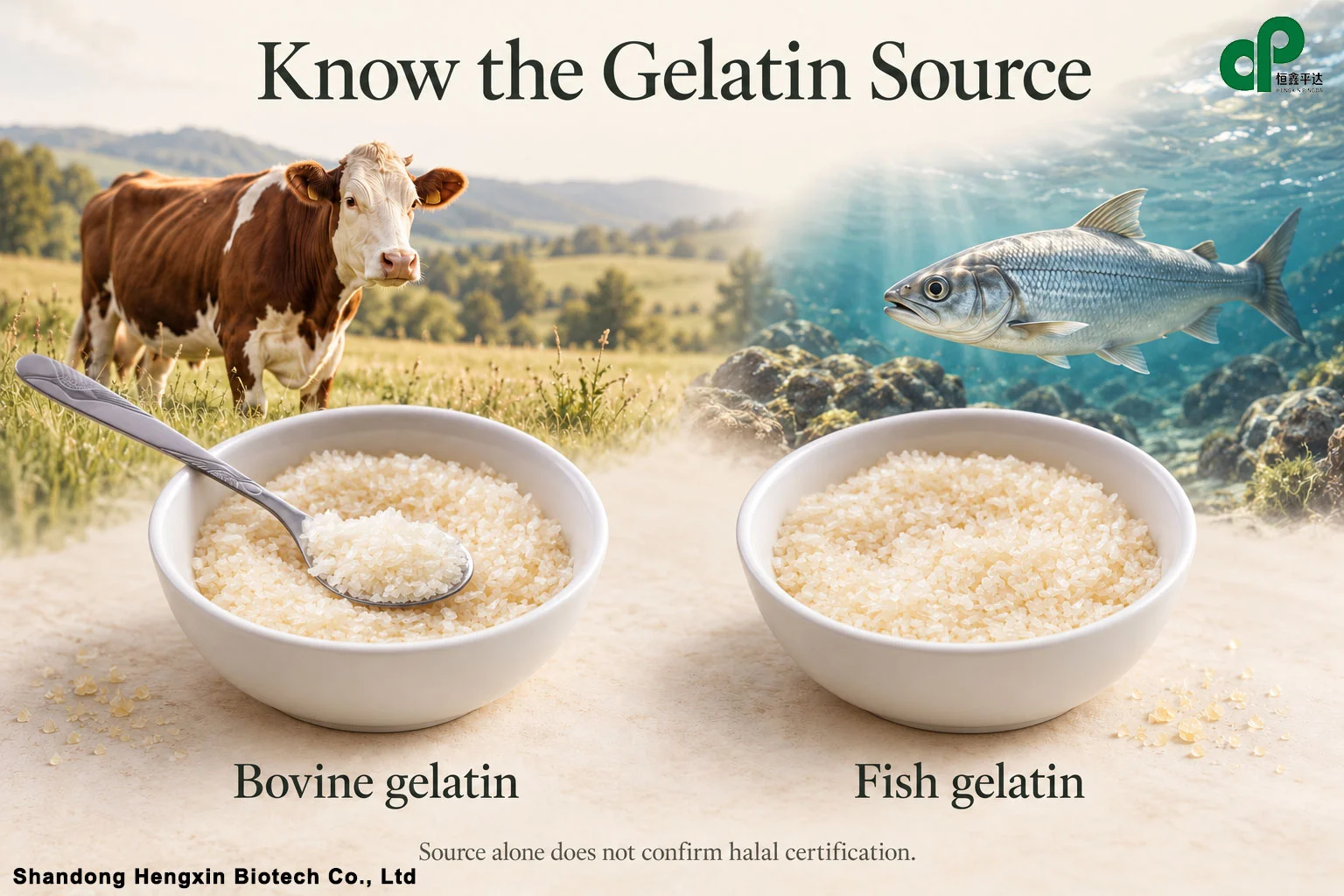
Find the animal. "Beef gelatin," "bovine gelatin," and "fish gelatin" say more than plain "gelatin."
Treat a kosher symbol as extra information. It helps, but it is not halal proof.
Check the rest of the label. Flavorings and colors can contain alcohol.
Watch for hidden gelatin. It turns up in candy, marshmallows, yogurt, desserts, vitamins, and capsules.
Ask the maker. Try a short email: "Which animal is your gelatin from, and do you have a current halal certificate that covers this product?"
Consider plant-based options. Agar, pectin, and carrageenan skip the animal-source question.
When in doubt, ask a scholar. Leave the product on the shelf until you hear back.
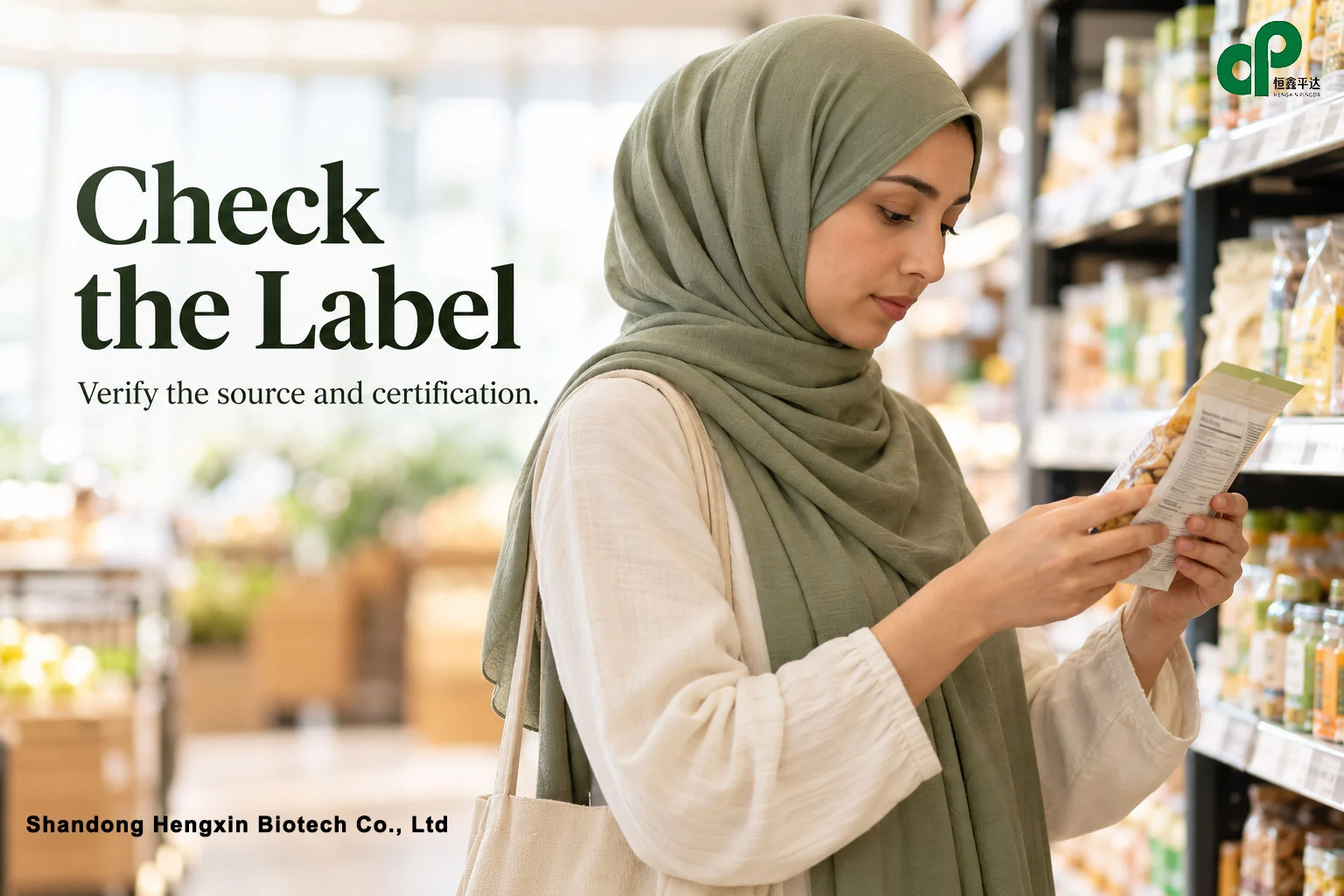
The same questions apply to businesses that buy gelatin by the ton. Food, supplement, and pharma brands that sell in Muslim markets should ask suppliers for the animal source, current halal certificates, and traceable records. Shandong Hengxin Biotech produces halal bovine gelatin in strict accordance with halal requirements, without alcohol or haram additives. With an annual gelatin production capacity of 36,000 metric tons, we can fully meet production needs for Muslim markets. Contact us for relevant certifications and specification documents.
Most scholars consider fish halal, and fish do not need Islamic slaughter, so fish gelatin is generally accepted. Still, check the rest of the ingredient list for alcohol-based flavors, and look for a halal logo if you want extra assurance.
No. Pareve means the food has no meat or dairy under kosher law. It says nothing about pork, Islamic slaughter, or alcohol.
That depends on the scholar you follow. Some accept kosher gelatin from kosher-slaughtered cattle or fish. Others want a halal certificate. Read the label, find out which animal the gelatin came from, and ask a scholar you trust about your situation.
That is the clearest case for Muslim shoppers, because the halal certifier has checked the product on its own terms. Make sure each certificate names the exact product and factory, and that neither one has expired. Shandong Hengxin offers bovine gelatin that meets both halal and kosher requirements. Available in 8–60 mesh with a gel strength of 120–280 Bloom, it is used in food and capsule applications. See our product catalog for details.