 zh-CN
zh-CN

Sep 15-2026
What Are the Advantages and Disadvantages of Softgel Capsules?
READ MORE >
A protein bar in a gym bag, a ready-to-drink beverage labeled "plant collagen" in the fridge, and a bag of grain-free dog food on the kitchen floor—these three items may seem completely unrelated, but they likely share the same raw material: enzymatically treated, small-molecule plant protein peptides.
For bulk raw material buyers and brand R&D teams, a more practical question is: How do these small-molecule peptides transition from the laboratory to concrete products on consumer shelves?

This article focuses on the practical applications of plant peptides in food and beverages, sports nutrition, beauty and personal care, pet food, and baking. This text does not constitute medical or efficacy claims; its purpose is to help consumers and brands evaluate the market trends and functions of this ingredient category.
Although this was covered in our previous plant peptide guide, it is worth reiterating—the formal terminology for plant peptides should be plant-based collagen peptides or collagen support peptides. They are highly bioactive, small-molecule peptides. While plant peptides lack the unique triple-helix structure of animal collagen, they can provide the amino acid building blocks or signaling support necessary for the human body to synthesize collagen.
First, the plant protein market is substantial and on an upward trajectory. Regarding this market, Hengxin, a plant peptide manufacturers investigated statistical data from multiple market research firms, noting significant differences in their statistical reporting scopes.
The first is Research and Markets, founded in 2002, which provides the following data:
"The market size is expected to grow from $64.07 billion in 2025 to $75.78 billion in 2026, at a Compound Annual Growth Rate (CAGR) of 18.3%. The plant protein market is projected to grow rapidly in the coming years, reaching $142.4 billion by 2030, with a CAGR of 17.1%."
— [Plant-Based Protein Market Report, 2026]
Another firm, Future Market Insights, utilizes a narrower statistical scope in its reporting:
"In 2025, the plant-based collagen market is valued at $7.1 billion. By the end of 2026, the market is expected to reach $7.7 billion, growing at a CAGR of 8.0%, and will reach $16.6 billion by 2036. Black beans will dominate with a 30.0% market share, while beverages will lead with a 44.0% market share."
— [Plant-Based Collagen Market, 2026]
The significant data discrepancy between the two reports stems primarily from different analytical dimensions. The former is a comprehensive forecast of the overarching plant protein market, while the latter is segmented based on the raw material sources, product formats, and distribution channels of plant collagen.
Both reports analyze the upstream market (plant protein). Is there a specific market analysis report for the enzymatically hydrolyzed plant peptide market? In this niche area, Future Market Insights published a "Plant Peptides - Global Industry Analysis and Opportunity Assessment" market report in 2025. In the report, they state:
"The plant peptides market size is expected to reach $850 million in 2025 and $2.6636 billion by 2035, growing by $1.8136 billion over the decade. With a high CAGR of 12.1%, the market size is expected to more than triple between 2025 and 2035."
— [Plant Peptides Market, 2025]
What do these rising figures indicate? Simply put, formulation requirements and consumer demands are significantly increasing. This presents both an opportunity and a challenge for plant peptide manufacturers. The opportunity lies in the accelerating market growth and rising demand; the challenge lies in product market acceptance and stability.
Why is the growth trend for these vegan proteins and peptides so fierce? Can traditional animal-derived proteins no longer sustain market consumption? The reasons become clear when we examine the industry trends for animal-source proteins. According to comprehensive analysis data from Research and Markets on animal proteins:
"The global animal protein market size is estimated at $1.3 billion in 2025 and is projected to reach $2.0 billion by 2032, with a CAGR of 6.7% from 2025 to 2032."
— [Animal Proteins Global Strategic Business Report, 2025]
Based on the market data for plant and animal proteins above, plant proteins have a greater window of opportunity, both in terms of overall growth rate and market economic value. Compared to plant proteins, peptides have an even higher compound annual growth rate and offer even greater opportunities.
In fact, given the substantial differences in conclusions and scopes across market reports, we recommend that if you are launching a new project or pivoting your business, you can reference this market data and then conduct small-scale market validation with your product.
If you are in the habit of reading product ingredient panels, you will find that many products have already been penetrated by these ingredients. As a raw material manufacturer of plant-based peptides, we will outline their applications in several high-frequency, everyday products below.
In the beverage aisles of convenience stores and supermarkets, you can easily find sparkling water, ready-to-drink beverages, or collagen water containing plant peptide additives. These are typically listed on the ingredient panel as pea peptides, rice peptides, or soy peptides. Further down the list, you might see Vitamin C or sodium hyaluronate, as they are often formulated together.
Solid beverage powders packaged in individual sachets can be poured into warm water, coffee, or tea with almost no impact on the original flavor, making them ideal for convenient use in the office or while traveling.

Energy bars, protein bars, and meal replacement shakes are another hiding place for plant peptides. Many plant-based protein bars incorporate pea and soy peptides, not only for their fast absorption but also because they are friendlier to lactose-intolerant individuals. Some meal replacement brands also feature a "plant collagen peptide + dietary fiber" combination, leveraging satiety and skin nourishment as dual selling points to attract consumer groups focused on weight management and daily care. This is currently a mainstream and highly popular application scenario.
Supplement gummies are a widely accepted format among the general public. Plant-based collagen gummies typically replace gelatin with pectin or carrageenan, adding plant peptides to satisfy vegan consumers' preferences. There are also drinkable jellies in individual pouches that taste like jelly snacks, promoting a convenient and delicious way to supplement plant peptides, commonly consumed during afternoon tea or carried in handbags.
The popularization of plant milks and plant-based yogurts has opened up new mix-and-match possibilities for plant peptides. Some high-protein plant yogurts are fortified with pea or rice peptides, allowing consumers to ingest small-molecule peptides alongside probiotics. Additionally, plant-based cheeses and puddings infused with plant peptides can occasionally be found in health food stores, typically emphasizing "animal-friendly" and functional claims.
In the personal care sector, soy peptides, pea peptides, or signal peptides designed from plant components are commonly found in facial serums, lotions, and masks. Their primary role in formulations is not to directly replenish collagen, but to act as signaling molecules that guide the skin to maintain a normal collagen metabolism rhythm. Hydrolyzed plant proteins also appear in shampoos and conditioners to help improve hair elasticity and toughness. Pea peptides are similarly utilized in nail strengthening treatments.
Compared to beverages, snacks, and skincare, the application of plant peptides in the pet sector may seem less conspicuous. Plant peptides can be paired with glucosamine, chondroitin sulfate, and Omega-3 fatty acids. Some coat-enhancing formulas use pea or rice peptides combined with biotin and zinc, marketing "skin barrier and coat shine" as key selling points.
In certain high-density aquaculture experiments, the addition of pea or soy peptides has shown improvements in feed conversion ratios. However, this is closely related to cultured species, water temperature, salinity, and management practices, and cannot be generalized.
Plant peptides can be combined with ingredients like glucosamine and chondroitin to provide daily joint care options for sports enthusiasts and middle-aged/elderly individuals who prefer vegan diets. Some plant-based BCAA or muscle recovery formulas also incorporate rice or pea peptides to leverage their relatively fast absorption properties.
The popularity and market trend of plant peptides are no accident. They do not rely on animal sources, making them suitable for vegan and halal dietary requirements, while avoiding animal-borne contamination risks such as Bovine Spongiform Encephalopathy (BSE). The land use and carbon emissions during production are generally lower than those of an equivalent weight of animal collagen.
l Solubility and Clarity: Intact plant proteins can occasionally exhibit graininess or sedimentation when dissolved in liquids. Small-molecule peptide segments obtained through hydrolysis offer superior solubility and clarity compared to intact proteins.
l Processing Stability: Peptides demonstrate better stability than intact proteins across a wider pH range and under thermal processing conditions. This is crucial in actual production, as most raw material formulations need to undergo pasteurization, acidification, or a combination of both processes.
Of course, speaking objectively from Hengxin’s 20 years of experience as a premium plant peptide manufacturer, plant peptides are not entirely identical to animal collagen in their peptide sequences, and their mechanisms of action also differ. Therefore, it is appropriate to view them as a "plant-based alternative solution" rather than an absolute replica.
Hengxin provides this section to serve as a reference for R&D teams currently evaluating "whether plant peptides are a suitable raw material choice," not as a warning against initiating such projects.
Allergen Risks Vary by Source: If there is an allergy to source plants like soy or wheat, the corresponding plant peptides should be carefully considered. Pea and rice carry a relatively lower allergen risk, but "lower" does not mean "zero."
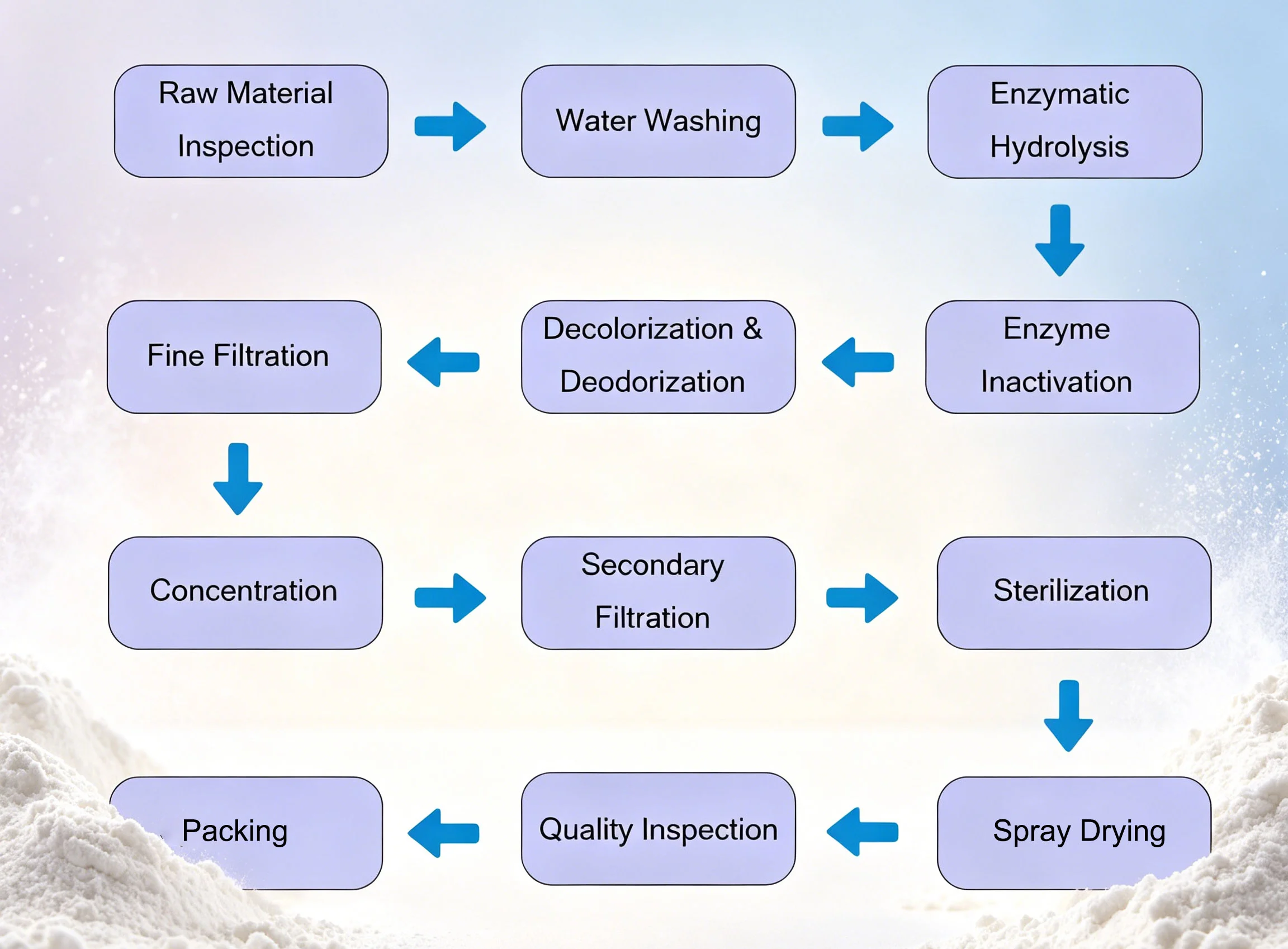
Flavor and Color: Raw plant proteins contain natural pigments and off-notes (bitterness, earthiness, or beany flavors) that cannot be completely removed by the hydrolysis step alone. Production-grade decolorization and deodorization processes (such as activated carbon treatment and vacuum deodorization, detailed in our production process guide) are required to transition peptides from "lab-usable" to "commercially viable for clean-tasting beverages or protein bars."
Digestive Adaptation Period: When initially consuming higher doses of plant peptides, some individuals may experience bloating, increased flatulence, or loose stools. This is usually associated with a sudden increase in protein intake and generally subsides as the body adapts.
Heavy Metal Testing: Plants absorb minerals from the soil, including lead, arsenic, cadmium, and mercury. We explain this in detail in our Plant Peptide Guide, but it bears repeating here: the evaluation of any plant peptide supplier should include batch-level heavy metal testing data, not just a generic food safety certificate.
Long-Term Overconsumption: Like any protein supplement, significant long-term overconsumption can increase the metabolic burden on the liver and kidneys. It is recommended to use them according to the product's suggested serving size.
Special Populations: Pregnant or nursing women, as well as individuals with kidney disease, should consult a doctor or dietitian before use.
No. Plant protein powder consists of intact, unhydrolyzed proteins. Plant peptides are obtained by breaking proteins into shorter amino acid chains through an enzymatic hydrolysis process, which alters solubility, absorption characteristics, and processing behavior—for core production workflows, please refer to our Plant Peptide Process Guide.
They cannot be directly substituted on a 1:1 equivalent basis. The amino acid composition of plant peptides is completely different from the specific peptide segments of collagen because true collagen only comes from animals. Plant peptides can serve as a plant-based alternative choice to animal collagen peptides, especially when there are requirements for vegan or kosher clean labels.
Rice protein peptides are generally considered to have a relatively low allergen risk and are highly digestible, thus frequently used in hypoallergenic formulations. However, allergen risks should always be verified individually based on the specific finished product and target market regulations, rather than relying solely on broad raw material categories.
For omnivorous dogs, at least one published clinical study indicates that properly formulated plant-based diets yield health outcomes comparable to traditional diets, though formulation quality varies significantly among manufacturers. For obligate carnivores like cats, completely plant-based diets require precise nutritional fortification since specific nutrients like taurine are difficult to obtain solely from plants. This remains a highly debated formulative challenge. This is a nutritional science issue that requires the judgment of veterinarians and formulation experts and cannot be generalized as a universal conclusion for all species.
Most plant peptides can withstand certain temperatures, but prolonged high-temperature boiling or baking may still break some peptide chains and affect their functionality. For daily consumption, it is recommended to mix them with warm water or room-temperature liquids. If the plant peptide powder is specifically labeled for baking, it has typically undergone stability treatments.
At a minimum, these should include: third-party quality certifications (ISO 9001, HACCP, Halal, Kosher, BRCGS), comprehensive batch traceability documents, readily available COA, TDS, SDS, and whether the supplier has the customization capability to adjust molecular weight distribution for specific applications.
This article is intended for technical and industry reference purposes only and does not constitute medical, efficacy, or regulatory advice. Any product claims mentioned herein should be individually verified against the specific regulations of the target market prior to use.