 zh-CN
zh-CN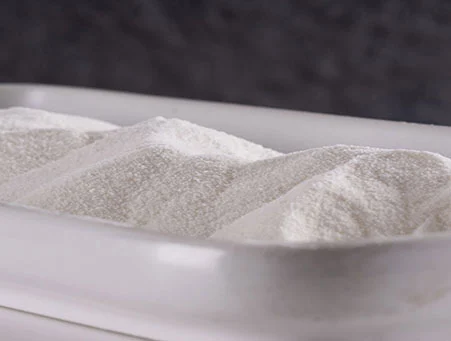
Apr 23-2025
Revitalize Your Body Inside Out with Hydrolyzed Collagen: The Ultimate Guide to Rejuvenation
READ MORE >
Bovine gelatin stands as one of the most versatile and widely utilized protein ingredients in modern manufacturing. From life-saving pharmaceutical capsules to delicious gummy candies and advanced biomedical materials, this collagen-derived biopolymer plays a critical behind-the-scenes role across global industries.
As demand for high-quality, reliable excipients and functional ingredients continues to grow, understanding bovine gelatin — its sources, production, properties, and applications — has become essential for procurement managers, formulators, and quality assurance teams in pharma and nutraceuticals. This comprehensive guide explores everything industry professionals need to know.
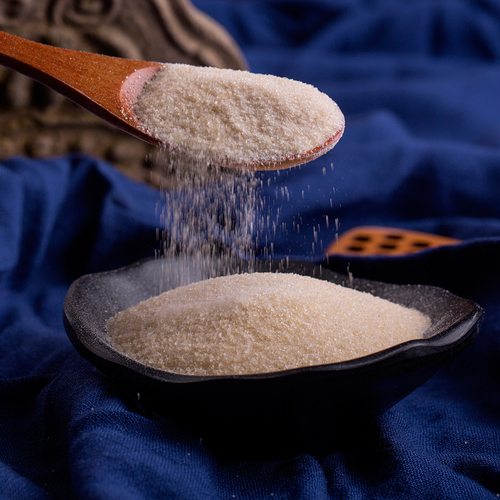
Bovine gelatin is a protein-based ingredient derived from the collagen found in cattle (bovine) hides, bones, and connective tissues. Through a carefully controlled hydrolysis process, the triple-helix structure of collagen is broken down into a functional, water-soluble biopolymer that forms thermo-reversible gels. Its popularity stems from several unique functional properties:
Thermo-reversible gel structure: It melts when heated and solidifies upon cooling, making it ideal for controlled-release applications and texture formation.
High protein amino acid profile: Rich in glycine, proline, and hydroxyproline, which contribute to its structural integrity and biocompatibility.
Strong film-forming and encapsulation properties: Excellent for creating protective capsule shells and microencapsulated ingredients.
Biocompatibility and safety: Extensively tested and recognized as GRAS (Generally Recognized as Safe) by regulatory bodies worldwide.
In essence, bovine gelatin bridges the gap between natural raw materials and high-performance industrial ingredients, delivering consistency, functionality, and cost-efficiency that many alternatives struggle to match.
At its core, bovine gelatin is composed almost entirely of collagen-derived proteins. The partial hydrolysis process yields a mixture of peptide chains with specific molecular weights that determine its gel strength (Bloom value) and application suitability. Key compositional elements include:
Collagen-derived proteins: The primary structural component, providing the backbone for gel formation.
Amino acids: Particularly high concentrations of glycine (approx. 20-30%), proline, and hydroxyproline, which are signature markers of collagen-based proteins.
Peptide chains: Formed during hydrolysis, these vary in length depending on processing parameters, influencing viscosity and gelling properties.
Component | Function | Contribution to Performance |
Collagen | Structural protein base | Provides gel network foundation |
Glycine | Supports flexibility & gel strength | Enhances elasticity and hydration |
Proline | Stabilizes protein structure | Improves thermal and mechanical stability |
Hydroxyproline | Enhances thermal stability | Increases gel melting point and durability |
This unique amino acid profile not only drives functionality but also contributes to nutritional benefits in food and supplement applications. Unlike many synthetic polymers, bovine gelatin is a natural, digestible protein that the human body readily recognizes.
In industrial production and processing, bovine gelatin is primarily sourced from three main raw materials:
Bovine Hide Gelatin (Primary Source): The inner layer of bovine skin, known as the split, is exceptionally rich in collagen. This is the most common raw material used in large-scale gelatin production, yielding a product with outstanding clarity and high gel strength.
Bovine Bones Gelatin: Crushed and demineralized bovine bones (ossein) provide a highly stable collagen matrix. Gelatin derived from bones is often utilized in pharmaceutical applications, such as hard capsule manufacturing, due to its durable film-forming properties.
Connective Tissues: Tendons and ligaments are fibrous tissues that also contribute to the collagen pool, supporting the overall viscosity and structural integrity of the final gelatin product.
In its natural state, collagen forms a tight, insoluble triple-helix structure. During the industrial manufacturing process, this rigid structure is carefully broken down (denatured) into gelatin through controlled hydrolysis, rendering it soluble in warm water and highly functional.
Raw Material Sources & Composition
Raw Material | Composition | Function in Gelatin Production | Points Buyers Should Verify |
Bovine Hide | High collagen content | Main industrial source for versatile uses | Origin, traceability, veterinary controls and religious certification where required. |
Bones | Mineral & collagen matrix | Provides high strength & rigid gel structure | Species documentation, demineralization controls, geographic origin. |
Connective Tissue | Fibrous protein network | Supports viscosity and elasticity | Supplier approval, segregation, hygiene controls and consistency of the raw-material mix. |
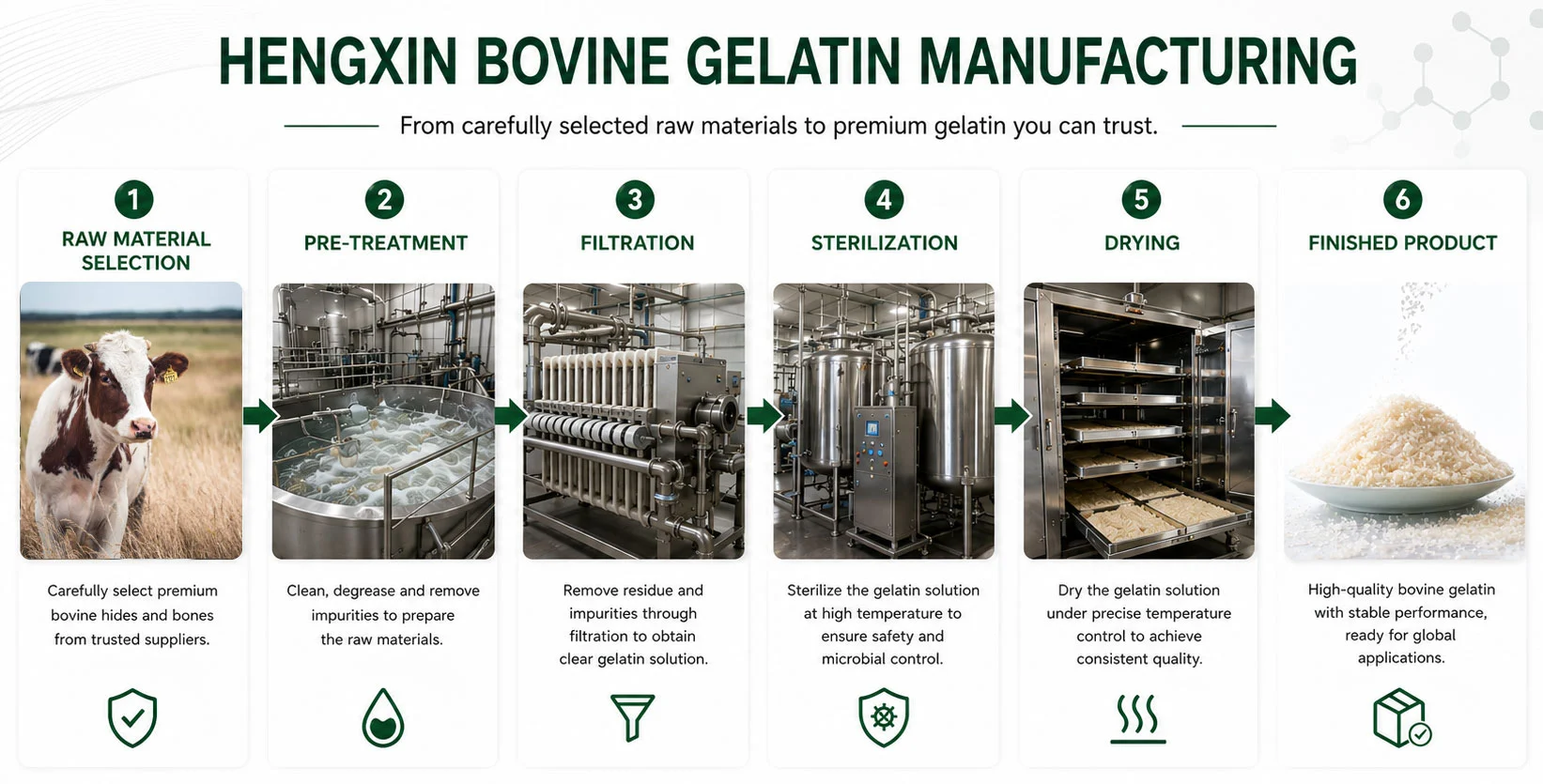
Manufacturing conditions vary by raw material, facility and target grade, but industrial production generally follows the stages below:
Step 1: Raw Material Selection - The process begins long before the materials reach the factory. Only high-quality bovine hides and bones from approved, disease-free herds are selected. Top-tier manufacturers enforce rigorous supplier auditing to ensure full traceability, veterinary inspection, and compliance with global food safety and pharmaceutical standards.
Step 2: Pretreatment - Because collagen is naturally bound with fats, minerals, and other non-collagenous proteins, the raw materials must undergo extensive pretreatment. The hides or bones are first degreased and thoroughly cleaned. They are then subjected to a prolonged alkaline or acid treatment. This vital step causes the collagen matrix to swell, gently breaking the intermolecular bonds and removing unwanted impurities without damaging the core protein structure.
Step 3: Collagen Extraction - Once pretreated, the materials are moved into large extraction vessels. The collagen is extracted through a process of controlled hot water hydrolysis. By gradually increasing the temperature across multiple extraction cycles, the insoluble collagen is successfully denatured and converted into a soluble gelatin liquor.
Step 4: Filtration & Purification - To achieve the pristine clarity required for clear gummies or pharmaceutical capsules, the gelatin solution undergoes multi-stage filtration. High-tech centrifugation and microfiltration systems meticulously remove any residual fats, fine fibers, and trace minerals, resulting in an exceptionally pure liquid.
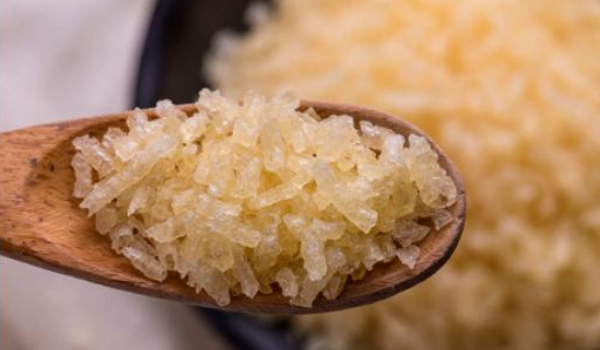
Step 5: Sterilization & Drying - Food safety is paramount. The purified gelatin solution is subjected to Ultra-High Temperature (UHT) sterilization to eliminate any microbiological risks. Following sterilization, the liquid is concentrated under a vacuum and fed into an extrusion and drying tunnel. Here, carefully filtered, temperature-controlled air gently removes moisture, producing dry, stable gelatin noodles or sheets.
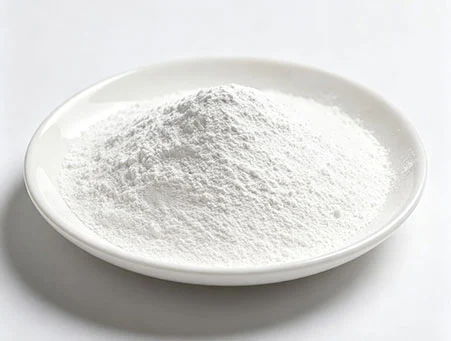
Step 6: Milling & Standardization - In the final step, the dried gelatin is milled into a fine, uniform powder. Because different industrial applications require different performance metrics, the powder is rigorously tested and standardized to achieve a specific Bloom strength (gel firmness) and particle size (mesh), ensuring consistent batch-to-batch performance for the end-user.
Property | What it means | Typical relevance |
Bloom | A measure associated with gel firmness under specified test conditions. | Gummies, jellies, capsules and molded products. |
Viscosity | Influences flow, processing behavior and film formation. | Capsule, coating and high-solids formulations. |
Thermo-reversible gelation | The gel sets on cooling and melts again when warmed. | Confectionery texture, desserts and controlled melt behavior. |
Film formation | Creates coherent, flexible films after drying. | Hard capsules, softgels, coatings and microencapsulation. |
The industrial versatility of bovine gelatin is unmatched. It is heavily utilized as a multifunctional ingredient across a wide array of manufacturing sectors due to its unique physicochemical properties:
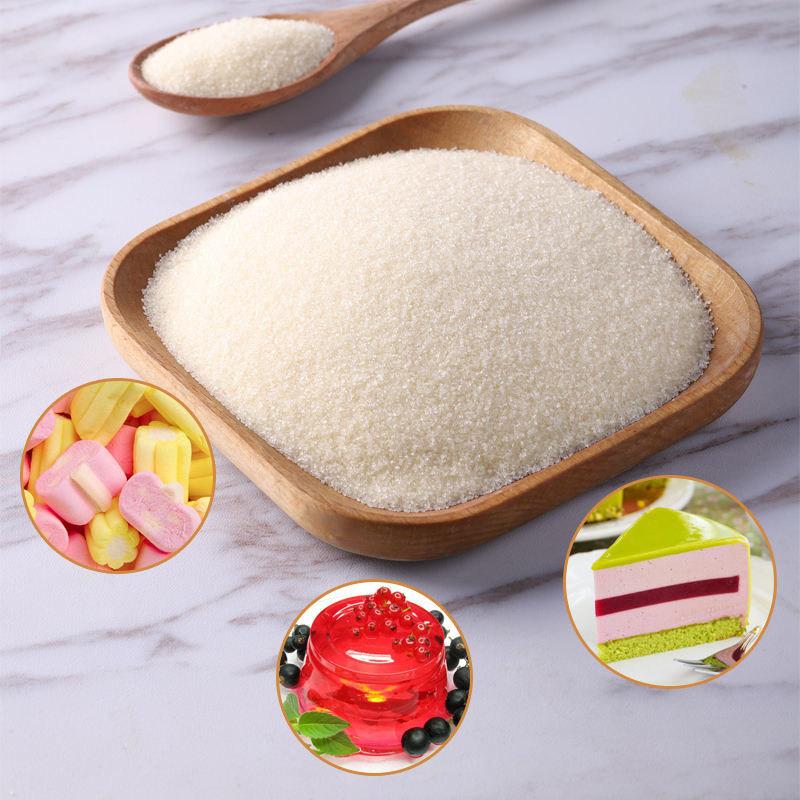
Food applications: In gummies and chewy confectionery, bovine gelatin creates an elastic texture and a clear appearance. Gelatin acts as a whipping agent for marshmallows. It helps control whey separation in yogurt and sour cream while giving. Other food uses include meat products and broth clarification.
Pharmaceutical applications: High-Bloom bovine gelatin is used to make two-piece hard capsule shells and liquid-filled softgels. Manufacturers also use bovine gelatin as a binding and coating agent in tablets, including formulations designed for controlled release.
Nutraceuticals and vitamins: Bovine gelatin is used in capsules for vitamins A, D, E, and K, as well as softgels containing omega-3 fish oil. For collagen supplements, bovine gelatin can be processed further into hydrolyzed bovine collagen peptides used in products for skin, hair, and joint health.
Industrial and biomedical applications: Bovine hide gelatin is used to microencapsulate flavors and active ingredients. It also appears in film coatings and technical adhesives. Biomedical applications include scaffolds and wound dressings.
Bovine gelatin capsules are precisely engineered shells made from high-quality bovine gelatin. They come in two main formats: hard capsules (two-piece) and softgels (one-piece, often filled with oils). Primary uses include:
Prescription and over-the-counter medicines
Dietary supplements and nutraceuticals
Herbal extracts and botanical actives
Oil-based nutrients (fish oil, CoQ10, CBD-free formulations)
Key advantages:
Fast dissolution in stomach acid (typically within minutes)
Superior oxygen and moisture barrier properties
Excellent machinability on high-speed filling lines
Cost-effective compared to many plant-based alternatives
Proven stability for both hydrophilic and lipophilic contents
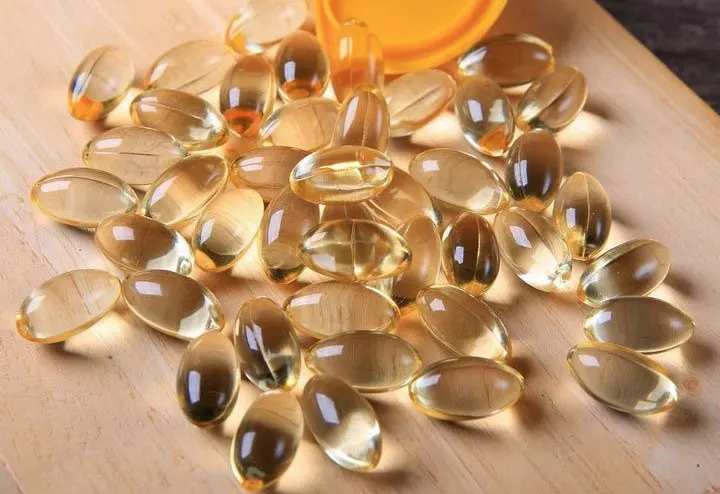
This is one of the most frequently searched questions in the supplement industry. Bovine gelatin capsules can be Halal when specific conditions are met: Halal compliant when:
Derived from cattle slaughtered according to Islamic rites (Halal slaughter)
Processed in dedicated or certified facilities
Free from cross-contamination with non-Halal materials
Certified by recognized Halal authorities
Not Halal when:
Source animals are not Halal-slaughtered
Production lines lack proper segregation and cleaning protocols
Conclusion: The Halal status depends on source certification and production compliance, not the gelatin molecule itself. Reputable manufacturers provide full documentation and third-party certification upon request. For a deeper look at halal gelatin, including its sources, types, and industrial uses, read our guide: What Is Halal Gelatin? Sources, Types, and Industrial Applications Explained.
In many Islamic scholarly frameworks, bovine gelatin in medicines is considered conditionally permissible (especially when no viable alternative exists and there is medical necessity). Highly purified gelatin undergoes extensive processing that many scholars view as transforming the material. Acceptance can vary between certification bodies, so consultation with local religious authorities or procurement of certified products is recommended for sensitive markets.
Vitamin capsules frequently use bovine gelatin. Halal status hinges on:
Capsule shell raw material source and slaughter method
Manufacturer’s overall Halal certification
Absence of non-Halal excipients (e.g., certain alcohols)
Many leading global supplement brands now offer dual lines: Halal bovine gelatin options alongside fish gelatin or plant cellulose alternatives to serve diverse consumer needs.
Proper usage maximizes performance. Bovine gelatin powder is typically activated through a hydration and dissolution process. Industrial usage steps:
Hydration (Blooming): Mix gelatin with cold water at a 1:5 to 1:10 ratio and allow it to swell for 20–60 minutes.
Dissolution: Gently heat to 50–60°C with stirring until fully dissolved. Avoid boiling above 80°C to prevent degradation.
Formulation integration: Incorporate into the base mixture at the appropriate stage.
Cooling & setting: The characteristic gel structure forms upon cooling.
Practical tips:
Always ensure uniform dispersion to avoid lumps
Adjust dosage according to required Bloom strength (typically 150–300 Bloom for most applications)
Test compatibility with other ingredients (pH, salts, sugars)
Store powder in cool, dry conditions for maximum shelf life (usually 2–3 years)
Whether for gummy production, capsule manufacturing, or protein fortification, following these protocols ensures consistent, high-quality results.
Type | Source | Main Uses | Relative Cost | Key Advantage |
Bovine Gelatin | Cow hides/bones | Pharma, capsules, nutraceuticals | Medium | Strong gel, pharma compatibility |
Porcine Gelatin | Pig skin | Food industry | Low | Excellent clarity, lower cost |
Fish Gelatin | Marine sources | Halal/functional foods | High | Cold-water solubility |
Pectin / Carrageenan | Plant or seaweed sources | Food & Pharma | High | Vegan appeal |
Cellulose capsule polymers | Plant-derived or synthetic processing routes | Non-animal capsule shells | Very High | Vegan appeal |
Bovine gelatin often strikes the best balance of performance, regulatory acceptance, and economics for pharmaceutical and high-end nutraceutical applications. Product developers should compare process temperature, pH tolerance, texture, dissolution, moisture sensitivity, cost and labeling requirements before changing systems.
Stable, traceable supply chain from established meat industry by-products
Consistent gel strength and batch-to-batch uniformity
Long history of safe use with extensive safety data
Compatibility with high-speed capsule manufacturing equipment
Cost-effective at industrial scales
Customizable specifications (Bloom, viscosity, particle size)
As a globally leading manufacturer of gelatin and collagen peptides, Hengxin Bio provides premium, high-quality bovine gelatin powder for the food, nutraceutical, and pharmaceutical industries worldwide. Partnering with the right supplier is about more than just purchasing ingredients; it is about securing your supply chain and elevating your product quality.
Advanced Manufacturing Capability - Hengxin Bio operates state-of-the-art facilities equipped with enormous production capacities, guaranteeing a stable bulk supply even amid global market fluctuations. Our unyielding strict quality control systems ensure that every batch of gelatin meets international pharmacopeial and food safety standards.
Innovation-Driven R&D - We do not just manufacture; we innovate. Backed by more than 30 active patents and an elite, innovation-driven R&D center, Hengxin Bio provides unparalleled formulation support. Whether you need precise viscosity control for softgel encapsulation or customized Bloom specifications for a novel gummy texture, our technical engineers are ready to assist.
Yes. Bovine gelatin can be Kosher or Halal when the cattle source and manufacturing process meet the relevant religious requirements and are certified by recognized authorities. Buyers should verify the supplier’s current certification rather than relying only on a “Kosher” or “Halal” product claim.
For Kosher sourcing requirements, read our guide: What Is Kosher Gelatin? Meaning, Certification, Sources & Manufacturing Process.
Bovine gelatin is derived from cattle, typically from collagen-rich materials such as hides and bones. However, it is not beef meat. The collagen is extracted and processed into gelatin with specific functional properties for food, pharmaceutical, and nutraceutical applications.
No. Both can come from bovine collagen, but they are different ingredients. Gelatin forms a gel under suitable conditions and is commonly used for gummies, marshmallows, and capsules. Collagen peptides are further hydrolyzed into smaller peptides, are highly soluble, and are commonly used in supplements, powders, and functional beverages.