 zh-CN
zh-CN

Mar 08-2025
The Essential Guide to Hard Gelatine Capsules in Pharmaceutical Applications
READ MORE >
Abstract: Neither bone gelatin nor skin gelatin is universally “better.” Bone gelatin is valued for its strength, stability, and structural performance, while skin gelatin—especially from fish or animal hides—often delivers better solubility, bioavailability, and sensory qualities. The right choice depends entirely on how you plan to use it: food texture, supplements, pharmaceuticals, or beauty formulations.
Gelatin shows up in far more places than most people realize. From chewy gummy candies and glossy dessert gels to pharmaceutical capsules and cosmetic serums, this protein-based ingredient quietly shapes texture, stability, and performance across industries.
At its core, gelatin is produced by partially hydrolyzing collagen, the structural protein found in animal bones, skin, and connective tissue. While the chemistry sounds simple, the source material makes a meaningful difference.
The two most widely used types are:
Bone gelatin, extracted mainly from bovine or porcine bones
Skin gelatin, derived from animal hides or fish skin
Though they share the same collagen origin, their physical behavior, processing characteristics, and ideal applications can differ significantly. Understanding these differences is key to choosing the right gelatin for your product—or your diet.
Before comparing performance, it helps to understand where each type comes from and how it's produced.
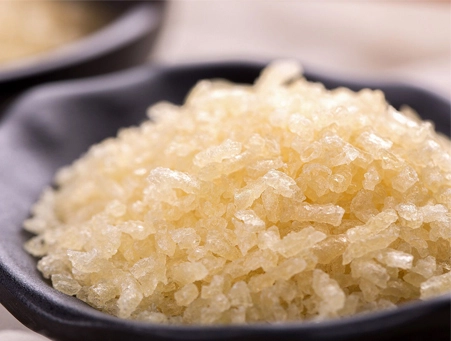
Bone gelatin is made primarily from cattle or pig bones, often with small amounts of attached connective tissue. Because bones contain large quantities of minerals such as calcium and phosphorus, production requires an intensive demineralization step before collagen extraction.
This process typically results in gelatin with:
Higher average gel strength
A more rigid gel network
Strong thermal and mechanical stability
Bone gelatin is widely used in applications where firmness and structural reliability matter most.
Skin gelatin is extracted from animal hides (commonly pigskin or cowhide) or from fish skin, especially cold-water species. Unlike bones, skin contains more fat and fewer minerals, so processing focuses on deep cleaning and degreasing rather than demineralization.
Skin gelatin is often associated with:
Easier dissolution
Smoother mouthfeel
Lighter color and higher clarity
Fish skin gelatin, in particular, is valued for its neutral taste and suitability for specialized dietary and cosmetic uses.
Further reading: Is Gelatin Made From Bones? A Complete Guide to Bone Gelatin Production, Sources, and Uses
Although both types originate from collagen, differences in source tissue and processing lead to noticeable functional variations.
Molecular Characteristics: In practical terms, bone gelatin forms firmer, more elastic gels, while skin gelatin tends to produce smoother gels that melt more readily, especially in cold or low-temperature applications.