
 zh-CN
zh-CN




Jun 15-2025
What You Need to Know About Gelatin Additives for Hard Capsules
READ MORE >
Collagen peptides have quietly become one of the most sought-after ingredients in today's health and nutrition industry. Once discussed primarily in dermatology journals, they are now found on supermarket shelves, blended into sports nutrition shakes, and featured in premium beauty formulations around the world.
This rapid market expansion is far from accidental. Behind it stand a handful of manufacturers that have spent decades—or even more than a century—refining collagen technologies. From hydrolysis processes and molecular weight control to resilient global supply chains capable of supporting worldwide demand, these companies continue to shape the evolution of the functional protein market.
Today's market no longer rewards manufacturing scale alone. Instead, buyers increasingly favor suppliers capable of delivering collagen peptides with tightly controlled molecular characteristics, ensuring consistent functionality and reliable performance across applications.

Across Europe, Asia, and North America, several leading collagen peptide manufacturers have established themselves as industry benchmarks. Through stringent quality standards, comprehensive traceability systems, and continuous application development, they continue to influence the direction of the global functional protein industry.
Not every collagen peptide manufacturer deserves a place among the industry's leaders. Identifying a truly reliable partner requires a far more rigorous evaluation than reviewing marketing materials alone.
Molecular Stability: The performance of collagen peptides is closely related to their molecular weight distribution and amino acid composition. High-quality manufacturers rely on precisely controlled enzymatic hydrolysis processes to deliver consistent bioavailability and biological activity. Even minor variations can become significant stability risks once incorporated into downstream formulations.
Raw Material Traceability: Bovine, porcine, marine, and poultry collagen each present different regulatory requirements and cultural considerations. Trusted manufacturers establish complete traceability systems that can track every production batch back to its original slaughterhouse or fishery, rather than simply identifying a general region of origin.
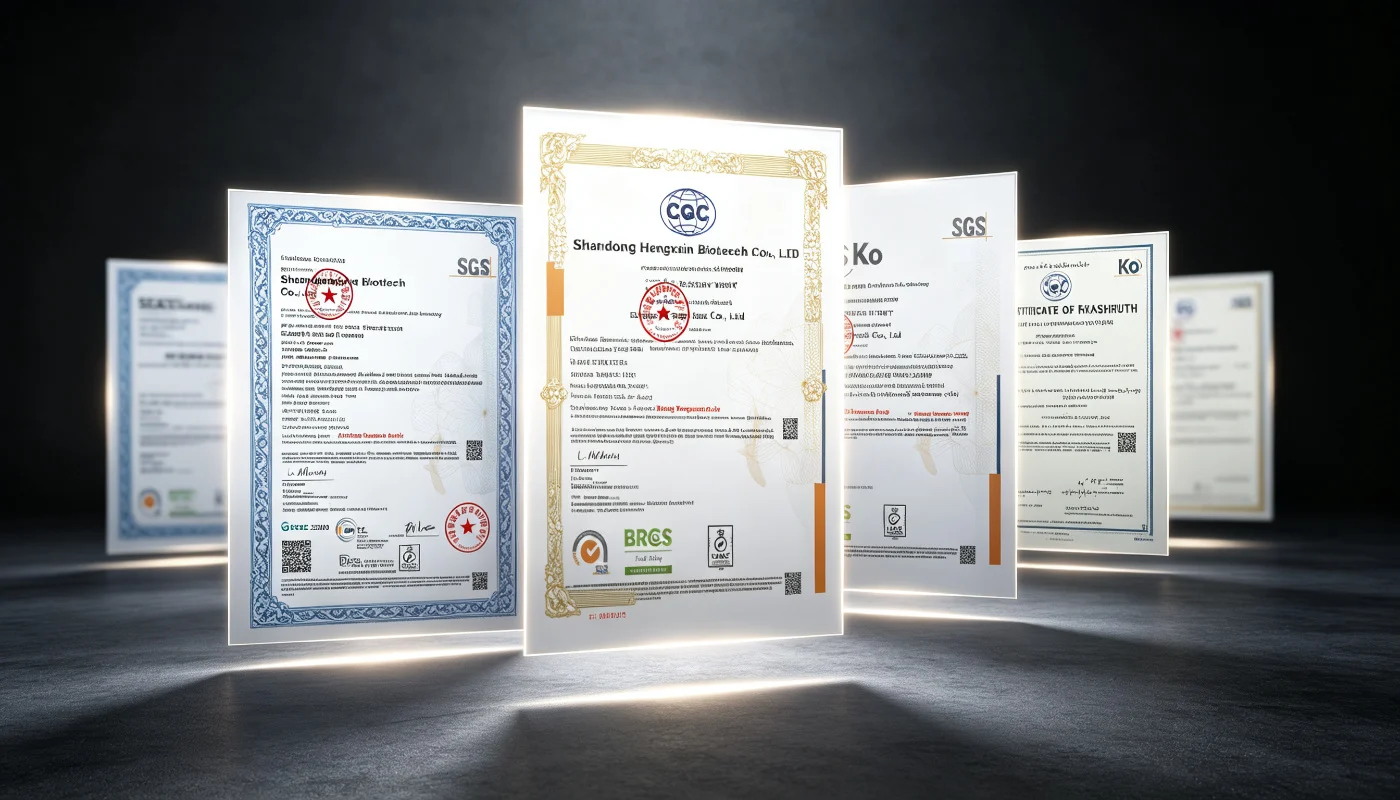
Quality Certifications: Certifications such as ISO 9001, FSSC 22000, HACCP, Halal, and Kosher represent far more than compliance credentials. They demonstrate disciplined manufacturing systems and standardized quality management. Suppliers lacking comprehensive certifications often leave buyers relying primarily on trust instead of objective evidence.
Manufacturing Capacity: Production capacity is about more than output volume. Relying on a single manufacturing facility creates a single point of operational risk. Manufacturers operating multiple production sites across different regions are generally better equipped to minimize supply disruptions caused by logistics challenges, raw material shortages, or geopolitical events.
Batch-to-Batch Consistency: Industrial customers prioritize long-term consistency over isolated product performance. Variations in viscosity, solubility, or other critical specifications can directly affect manufacturing efficiency and product quality throughout an entire production process.
Research and Scientific Validation: Peer-reviewed clinical studies distinguish scientifically supported ingredients from marketing claims. Manufacturers that actively invest in or participate in human clinical research provide brand owners with stronger scientific evidence to support product positioning and regulatory-compliant marketing.
Sustainability Practices: Responsible utilization of animal by-products and continuous efforts to reduce water consumption during extraction have evolved from competitive advantages into essential business requirements. As environmental awareness continues to grow, sustainability has become an increasingly important consideration for global buyers.
As a subsidiary of Darling Ingredients, Rousselot has built a strong reputation for transforming meat and seafood processing by-products into high-value collagen solutions. Its flagship Peptan® collagen peptides are widely used across the food, pharmaceutical, and nutritional industries, supporting applications in joint mobility, skin health, and sports recovery.
With a globally integrated manufacturing network and vertically integrated raw material supply chain, Rousselot has established itself as one of the most influential suppliers in the rapidly growing "beauty-from-within" nutrition market.
Founded in 1875 and headquartered in Eberbach, Germany, GELITA has spent nearly 150 years advancing collagen science. Today, the company operates an extensive global manufacturing and distribution network, supplying gelatin, collagen peptides, and specialty proteins to the nutrition, pharmaceutical, and food industries.
Rather than offering generic collagen supplements, GELITA develops bioactive collagen peptides designed to support specific physiological functions, including joint health, bone strength, and skin elasticity. Backed by extensive clinical research, the company positions itself as a scientific partner capable of helping brands build evidence-based product claims.
Part of the Tessenderlo Group's Bio-Valorization business, PB Leiner was the first company to commercialize cold-soluble gelatin, a technological breakthrough that significantly expanded gelatin's application potential.
Using porcine skin, bovine hide, and bones as raw materials, the company manufactures a comprehensive portfolio of gelatin and collagen peptides tailored to customer requirements. Its production facilities span Belgium, Germany, the United Kingdom, China, the United States, France, Argentina, and Brazil, providing one of the industry's broadest global manufacturing footprints.
Founded in 1918, Nitta Gelatin has developed more than a century of expertise in producing marine- and bovine-derived collagen peptides. Its Wellnex® collagen peptide portfolio is recognized for high bioavailability and is widely used in products targeting skin, joint, and bone health.
Supported by decades of research and manufacturing experience, Nitta has become a trusted supplier to the Asian beauty and wellness market, where product purity and scientific credibility are highly valued.
With a long-established heritage in collagen manufacturing, Weishardt specializes in marine- and bovine-derived collagen peptides. Its Naticol® marine collagen range is positioned as a premium ingredient for nutritional applications.
The company's clinically supported collagen solutions are developed for skin hydration, joint comfort, and bone health. Comprehensive traceability systems and internationally recognized quality certifications reinforce its commitment to product integrity, while sustainable sourcing remains a core principle throughout its raw material procurement strategy.
Operating since 1966, Lapi Gelatine has established a solid reputation for producing bovine- and marine-derived collagen peptides in Italy. Today, its products are distributed to approximately 50 countries worldwide.
Serving both multinational corporations and niche specialty manufacturers, the company supplies ingredients for the food, nutraceutical, pharmaceutical, and cosmetic industries. Its long-term success reflects a resilient business strategy built on diversified distribution channels, including direct sales, agents, and regional distributors, rather than relying solely on rapid expansion.
Established in 2005, Hengxin Gelatin brings more than 20 years of experience in gelatin and collagen peptide manufacturing. The company is supported by an experienced technical team and continuously incorporates advanced international technologies and production equipment into its manufacturing operations.

All products are manufactured in accordance with stringent quality standards. To ensure accurate production records and process consistency, Hengxin has implemented an automated monitoring system throughout its manufacturing facilities. Its production processes are designed around scientifically validated quality management principles, supporting consistent product quality.
The company has an annual collagen peptide production capacity of 12,000 metric tons and holds more than 30 patented technologies. Buyers evaluating Chinese collagen peptide suppliers can use our China sourcing guide to assess factory status, certifications, traceability, testing capability, and export experience.
Holista Colltech has carved out a distinctive market position by specializing in ovine (sheep-derived) collagen, a category that has traditionally received less attention than bovine or marine collagen.
Leveraging proprietary extraction and purification technologies, the company supplies collagen peptides sourced through fully traceable and sustainable procurement practices. Its strong focus on Halal-certified production has also enabled it to expand into markets where porcine-derived ingredients face cultural or religious restrictions.
Selecting a collagen peptide supplier is less about purchasing an ingredient and more about choosing a long-term business partner. In practice, brand owners typically evaluate suppliers through multiple channels before making a sourcing decision.
l Industry trade shows such as Vitafoods, SupplySide, and in-cosmetics remain among the most effective venues for supplier evaluation. Buyers can examine product samples firsthand, engage directly with technical teams, and assess how suppliers respond to in-depth technical discussions.
l B2B sourcing platforms and supplier directories have significantly streamlined the supplier screening process. Before requesting samples, procurement teams can narrow their options by reviewing certifications, raw material origins, manufacturing capabilities, and production capacity.
l Independent third-party audits and laboratory testing have become an essential part of supplier qualification. Rather than relying solely on supplier-issued reports, many buyers verify key quality indicators—including heavy metal content, microbiological safety, and amino acid profiles—through independent testing organizations.
l Industry reputation and peer recommendations continue to carry considerable influence. Within formulation and product development communities, referrals from experienced professionals often serve as a reliable indicator of a supplier's long-term performance. Leveraging strong technical expertise and consistent manufacturing capabilities, Hengxin Gelatin has earned the trust of leading brands as well as emerging companies, with many new partnerships established through customer referrals.
l Pilot production and trial batches enable brands to evaluate product consistency and manufacturing reliability before committing to large-scale procurement contracts, helping reduce sourcing risks during commercialization.
Several critical technical and commercial factors continue to influence product performance and the future direction of the collagen peptide market.
l Raw Material Source: Bovine collagen remains the industry's primary raw material due to its stable and abundant supply. Marine collagen, known for its relatively lower molecular weight, has gained popularity among consumers seeking marine-derived ingredients and in markets requiring Halal-compliant solutions, often commanding a premium price. Porcine collagen offers cost advantages but faces limitations in regions where religious or dietary restrictions reduce market acceptance.
l Molecular Weight: Lower molecular weight collagen peptides are widely recognized for their rapid absorption and are frequently positioned as premium ingredients. Standard hydrolyzed collagen, meanwhile, continues to serve a broader range of applications where cost-effectiveness is an important purchasing consideration.
l Extraction Technology: Although enzymatic hydrolysis generally involves higher production costs, it produces collagen peptides with fewer impurities and more consistent quality. This offers a significant advantage for beverage applications, where minimizing off-flavors remains one of the greatest formulation challenges.
l Regulatory Compliance and Certifications: Even technically superior collagen peptides may struggle to enter international markets without the certifications and regulatory documentation required by target countries. Compliance has become a fundamental requirement for successful global commercialization.
l Dosage Form Flexibility: Product format is becoming an increasingly important competitive factor. Younger consumers seeking convenience are driving demand for ready-to-drink products, oral liquid shots, and single-dose ampoules, while traditional nutrition consumers continue to favor familiar formats such as powders and capsules.
Together, these factors shape product positioning, market competitiveness, and long-term growth opportunities across the collagen peptide industry.
The collagen peptide market continues to evolve through technological innovation and changing consumer demand. Several key trends are expected to shape the industry's future.
Bioactive peptides targeting specific physiological functions are gradually replacing conventional collagen products as the industry's primary growth engine. Leading manufacturers are moving beyond marketing collagen as a single ingredient by developing peptide fractions designed to support connective tissue repair, skin elasticity, bone mineral density, and other targeted health benefits. This enables brand owners to make more precise, science-supported product positioning.
Sports nutrition has become one of the fastest-growing application areas for collagen peptides, extending their use well beyond traditional beauty supplements. Manufacturers are increasingly developing peptide ingredients formulated to support tendon recovery, connective tissue remodeling, and exercise resilience, with a growing body of clinical research supporting these applications.
Functional beverages, gummies, and ready-to-drink collagen products continue to gain market share from conventional powder formats. Multifunctional formulations that combine collagen peptides with probiotics, adaptogens, or ceramides are rapidly becoming mainstream, particularly in East Asian markets where convenient nutritional supplements have achieved widespread consumer acceptance.
Non-animal collagen produced through fermentation is gaining attention as an emerging technology. Although still representing a relatively small segment of the market, it offers manufacturers opportunities to develop products positioned around vegan-friendly and clean-label concepts—claims that conventional animal-derived collagen peptides cannot make.
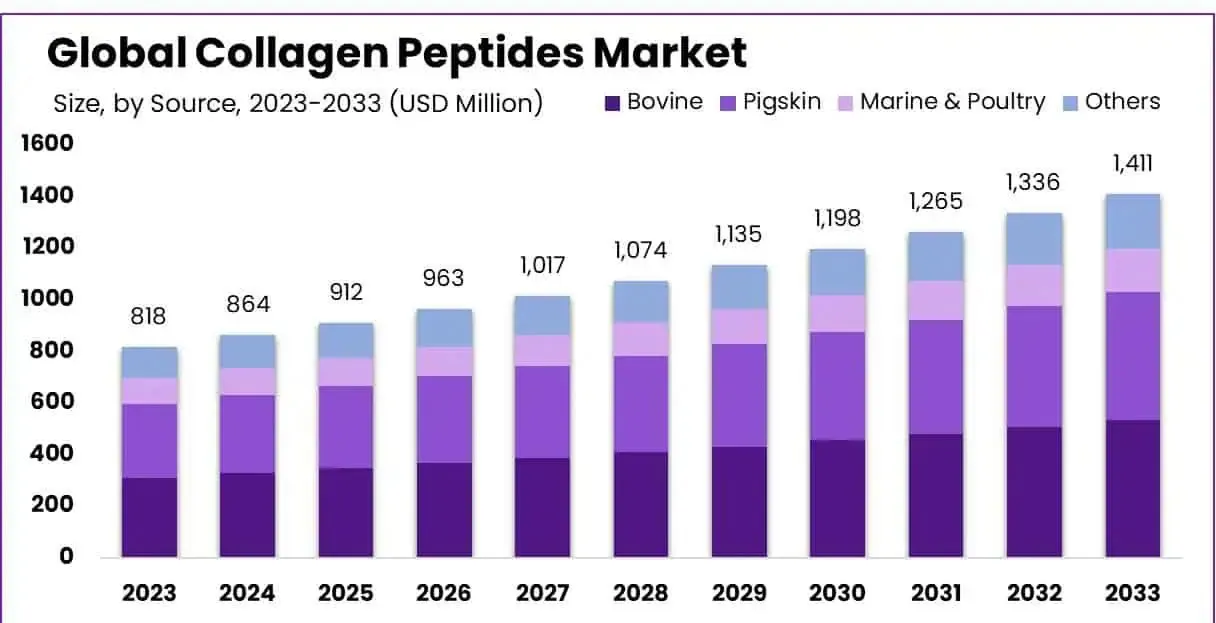
Market data referenced in this section is based on the collagen peptides market report published by Market.us.
Competition for collagen-rich raw materials continues to intensify. Today, collagen peptide manufacturers compete with leather processors, pet food producers, and gelatin manufacturers for the same supply of bovine hides, fish skins, and porcine by-products. As demand from multiple industries grows, raw material costs are expected to remain under upward pressure.
Sustainability is becoming an increasingly important purchasing criterion. As consumers pay closer attention to the environmental impact of animal-derived ingredients, manufacturers that cannot demonstrate credible by-product utilization strategies or low-impact sourcing practices may face growing reputational risks—particularly among younger, sustainability-conscious consumers.
Fragmented regulatory requirements continue to complicate global market expansion. A health claim accepted in one region may require substantial additional scientific substantiation—or even be prohibited entirely—in another. As a result, manufacturers must maintain multiple compliance strategies to meet the regulatory requirements of different markets.
Competition from plant-based proteins and fermentation-derived collagen alternatives is steadily increasing. While these emerging technologies have yet to rival traditional collagen peptides in commercial scale, they represent a long-term structural challenge for conventional animal-derived collagen manufacturers that are slow to diversify their technology portfolios.
The global collagen peptide industry is entering a more sophisticated stage of development, driven by advances in both bioscience and industrial manufacturing. Leading manufacturers are evolving beyond the role of raw material suppliers to become innovation partners that help define the future applications of functional proteins.
As demand continues to grow across the health, beauty, and pharmaceutical sectors, future competition will increasingly depend on molecular control capabilities, regulatory expertise, and supply chain transparency. At the same time, the emergence of plant-based peptides and digital manufacturing technologies is accelerating the industry's transition from a raw material-driven market toward an era of functional protein engineering.