 zh-CN
zh-CN
Jul 17-2024
Unlocking the Benefits of Hydrolyzed Collagen in Agricultural Food Additives
READ MORE >
2026-07-23
For global buyers, choosing the right gelatin depends on four factors: raw material source, application requirements, certification needs and quality specifications. Different markets also have different requirements. A pharmaceutical company producing hard capsules may need pharmaceutical-grade bovine gelatin. A food manufacturer serving Muslim consumers may require halal gelatin. A brand targeting Jewish consumers may need kosher gelatin with verified certification.
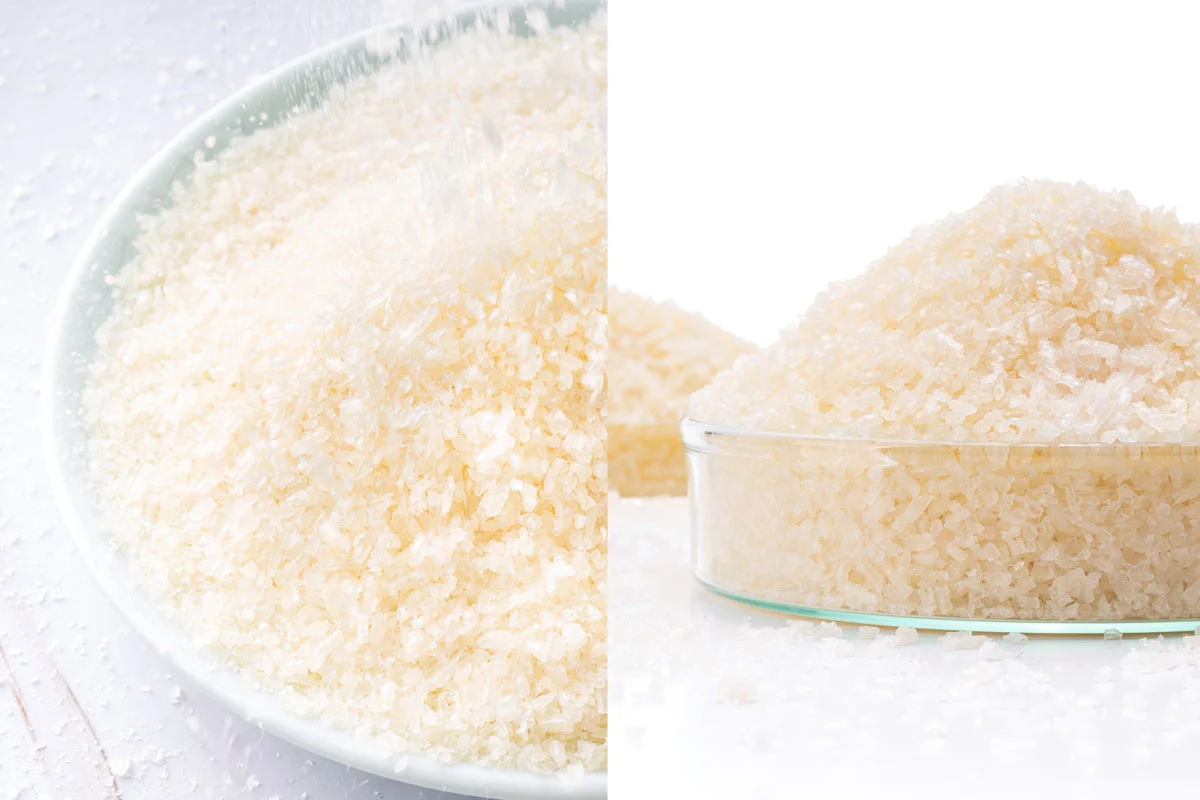
Understanding the differences between pigskin gelatin, bovine gelatin, bone gelatin, halal gelatin, and kosher gelatin helps buyers reduce compliance risks and select the right supplier.
This guide explains how B2B buyers can evaluate gelatin sources, application requirements, quality parameters, and manufacturer capabilities before making purchasing decisions.
Gelatin is a natural protein ingredient produced from collagen. Collagen is a structural protein found in animal connective tissues, including skin, bones and cartilage.
Through controlled processing, collagen is converted into gelatin with unique functional properties. These properties include gel formation, viscosity control, film formation, and binding ability.
The gelatin production process usually includes several key steps:
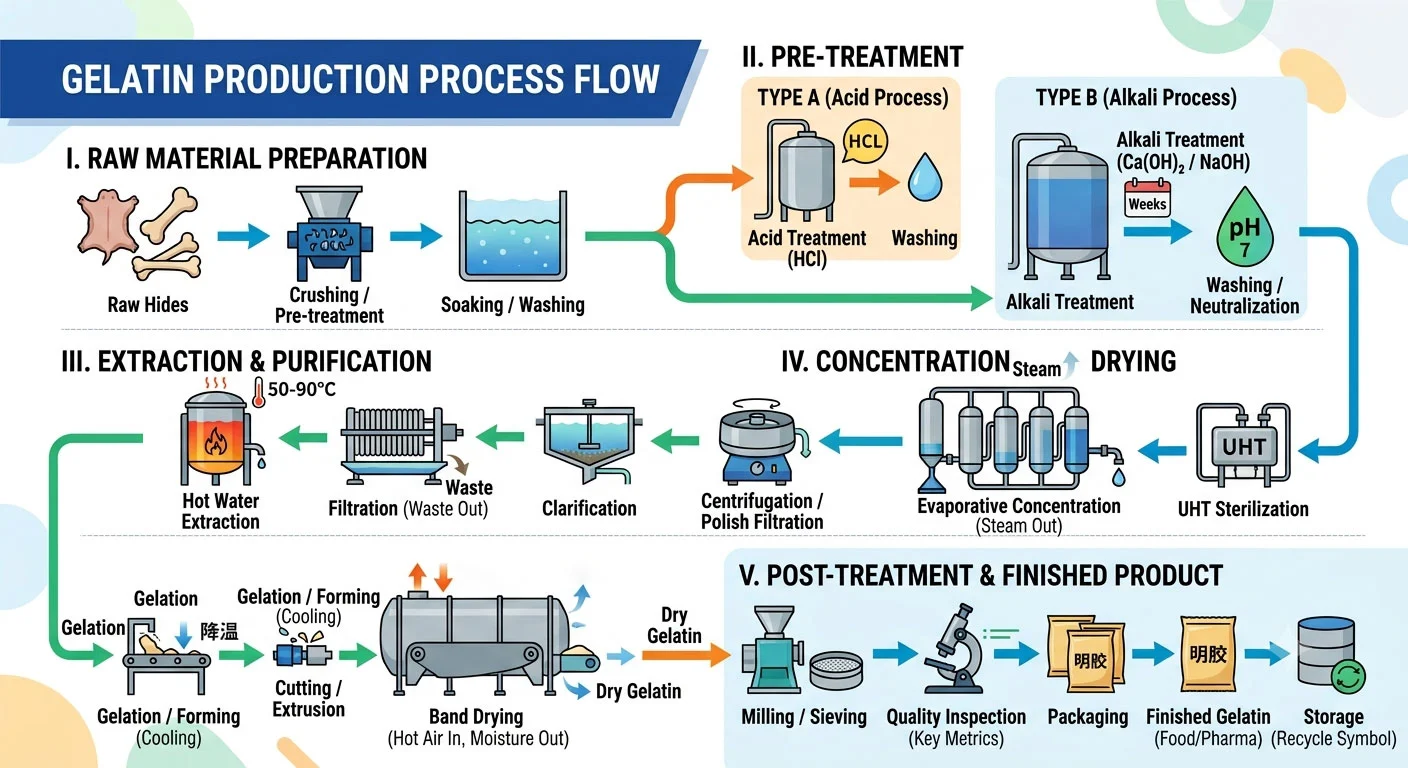
The final gelatin quality depends on many factors, including raw material selection, extraction conditions, purification technology, and quality control systems.
For industrial buyers, gelatin is not only a protein ingredient. It is a functional material that must match specific production requirements.
For example:
Capsule manufacturers focus on gel strength and viscosity.
Food companies focus on texture and stability.
Supplement brands focus on source transparency and certification.
Pharmaceutical companies require strict quality control and traceability.
Gelatin mainly comes from three animal sources: Pigskin, bovine hide and bones.
Each source has different market applications and certification considerations.
| Gelatin Type | Source | Common Applications | Main Considerations |
| Pigskin Gleaitn | Porcine skin | Food products, capsules | Limited in Halal and Kosher markets |
| Bovine Gelatin | Cow hide | Capsules, supplements, food | Widely accepted with proper certification |
| Bone Gelatin | Bones(cow, pig or chicken) | Pharmaceuticals, food | Requires strict raw material traceability |
The most important factors in selecting the right gelatin additives are the target market standards and demands, the product application, and religious beliefs.
As a professional and automated gelatin manufacturer, Hengxin can provide customers with clear documentation regarding raw material sourcing and production control.
Pigskin gelatin has been one of the most commonly used gelatin types for decades.
It is produced from cleaned porcine skin through collagen extraction and purification processes.
Because pigskin is rich in collagen, it can provide stable gel strength and good processing performance.
Pigskin gelatin continues to be used in many food and pharmaceutical applications because of its mature production technology and stable supply chain.
In recent years, pork skin gelatin has been widely used in gummy candies, desserts, dairy products, soft capsules and hard capsules.
Based on five-year forecast data from Research and Markets:
“The porcine gelatin market size has grown strongly in recent years. It will grow from $1.08 billion in 2025 to $1.15 billion in 2026 at a compound annual growth rate (CAGR) of 6.6%. ”
- Research and Markets [Porcine Gelatin Market Report 2026]
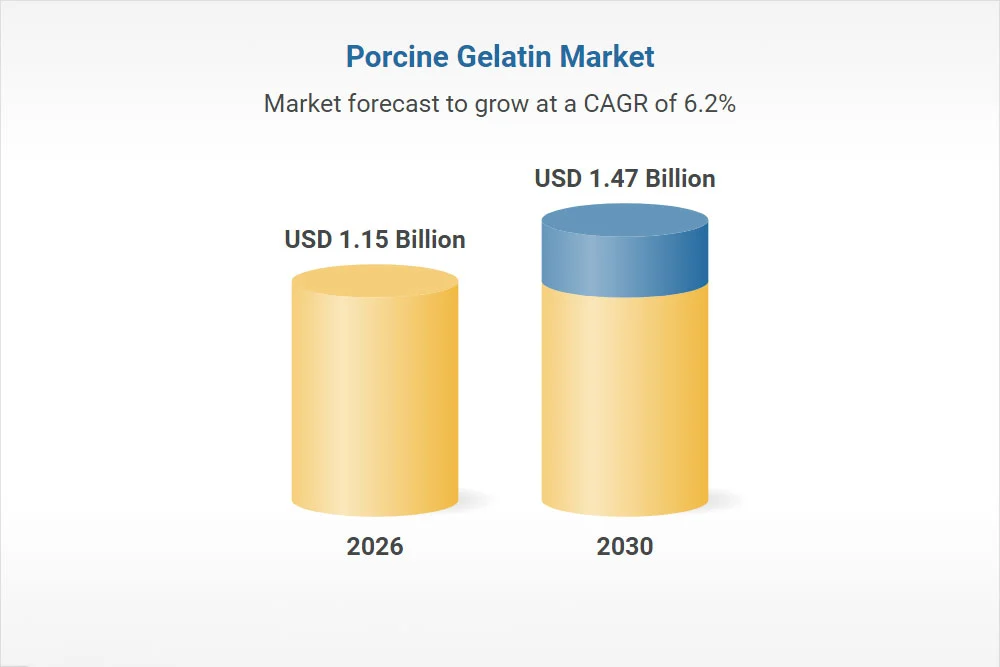
The pork gelatin market is poised for substantial upward momentum. The firm attributes this growth to the widespread use of gelatin as a food gelling agent, steady supply of pork-derived raw materials, booming confectionery and bakery sectors, rising output of pharmaceutical capsules, and the maturation of collagen extraction technologies.
In regions such as the Middle East and Southeast Asia, Islamic and Jewish dietary laws strictly prohibit pork and all pork-derived derivatives. If commercial buyers and purchasers source gelatin without halal certification, they will be completely locked out of Muslim consumer markets.
For this reason, you should verify whether wholesale gelatin manufacturers hold the relevant qualifications and certifications before selecting your raw materials.
High quality halal bovine gelatin is sourced from all parts of cattle (including hides, bones, tendons, etc.). It is gelatin whose slaughtering, production and storage processes fully comply with Islamic Sharia law.
Slaughter Requirements: At the moment of slaughter, the animal must be alive and healthy, free from any fatal illnesses. If stunning is applied, the stunning method shall be reversible and non-lethal; it must not cause the animal to die prior to the actual throat cut. Under Islamic law, pork and all pork-derived products are strictly prohibited.
Slaughter Procedures: The person performing the slaughter must be a mentally competent Muslim.
The slaughterer shall recite Bismillah or Allahu Akbar at the time of slaughter. An extremely sharp knife must be used; dull or serrated knives are forbidden. The trachea, esophagus, as well as both carotid arteries and jugular veins shall be severed swiftly in a single cut. Following slaughter, all blood must be fully and completely drained from the animal’s body.
Monitoring target market trends is an essential skill for most suppliers, helping them mitigate risks across key operational areas like inventory management and procurement planning.
DataIntelo released a market trends report on global Halal gelatin, noting:
"The global halal gelatin market was valued at $1.8 billion in 2025 and is forecast to reach $3.4 billion by 2034, expanding at a compound annual growth rate (CAGR) of 7.3% over the 2026-2034 forecast period."
- Datalntelo [ Global Halal Gelatin Market ]
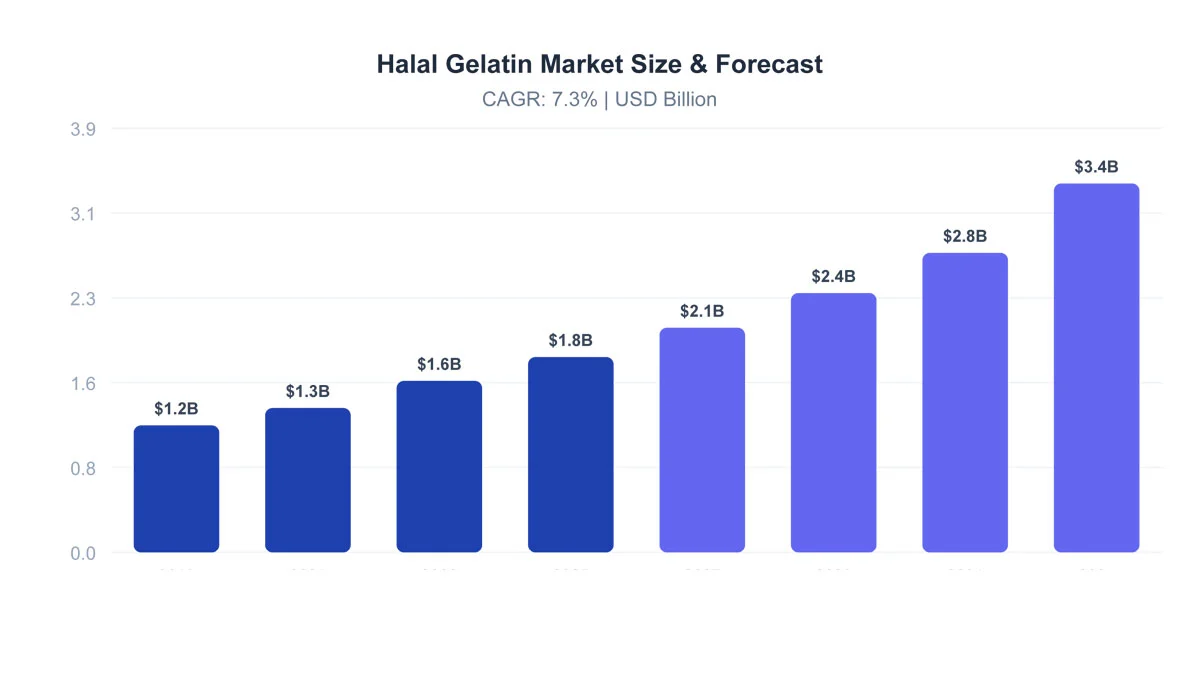
This report highlights a steady, upward trajectory for the global market—a strong, positive signal for international suppliers operating on a global scale. But how should regional suppliers or companies targeting single-country markets determine where to focus their investments?
The same report provides valuable context by breaking down demand growth across the Asia-Pacific and North American regions:
"In terms of CAGR, the Asia Pacific halal gelatin market is forecast to advance at 8.1% annually through 2034, making it the fastest-growing region globally."
"North America's halal gelatin market is projected to grow at a CAGR of approximately 6.5% through 2034."
- Datalntelo [ Global Halal Gelatin Market ]
Industry analysts attribute this regional momentum to the expanding purchasing power of Muslim consumers, combined with rising demand from pharmaceutical capsule manufacturers seeking Halal certification to expand their export footprints.
Another industry report offers key data specifically on the global bovine gelatin market:
"The global bovine gelatin market size was valued at USD 1.44 billion in 2025 and is projected to grow from USD 1.53 billion in 2026 to USD 2.75 billion by 2034, exhibiting a CAGR of 7.58% during the forecast period."
-FORTUNE BUSINESS INSIGHTS [ Bovine Gelatin Market ]
Taken together, these two data reports warrant close study if you are embarking on new market expansion or shifting your strategic focus. They offer critical insights to help you build a clear, well-structured plan for your manufacturing inventory and market positioning.
High purity halal bovine gelatin starts with controlled raw materials.
A reliable manufacturer should manage the complete production process:
l Certified Bovine Raw Material
l Raw Material Inspection
l Pretreatment
l Collagen Extraction
l Purification
l Quality Testing
Gelatin properties vary depending on the collagen source and manufacturing process. To learn more about the characteristics and production technology of bovine gelatin, explore our article: Bovine Gelatin: Meaning, Sources, Manufacturing Process
For B2B buyers, important quality indicators include:
| Quality Parameter | Why it Matters |
| Bloom Strength | Determines gel performance and texture |
| Viscosity | Influences processing behavior |
| Molecular Weight Distribution | Affects functional performance |
| Moisture Content | Influences storage stability |
| Microbial Testing | Ensures product quality |
| Color and Odor | Important for final applications |
Choosing a gelatin supplier with strong process control capabilities, such as Hengxin Biotech, can help manufacturers achieve more consistent product performance during large-scale production.
Bone gelatin is a high-purity natural protein extracted from animal bone collagen, rich in essential amino acids like glycine and proline. It delivers exceptional thermal stability, gel strength, and cross-linking resistance, which significantly enhances hard capsule shell rigidity and guarantees reliable drug release. Additionally, as a bioavailable collagen source, it effectively supports joint repair and bone health.
High-purity kosher bone gelatin is gelatin produced from approved animal sources under kosher production standards.
The term "kosher" refers to compliance with Jewish dietary laws.
The source of gelatin is important because not all animal-derived gelatin can be considered kosher.
A reliable supplier should provide:
l Kosher certification documents
l Raw material traceability
l Production records
l Batch information
No. Kosher gelatin is not vegetarian. This is a common misunderstanding among consumers and buyers.
Gelatin is produced from animal collagen, so it is an animal-derived ingredient.
Vegetarian alternatives usually come from plant-based materials such as Agar, Pectin and Carrageenan.
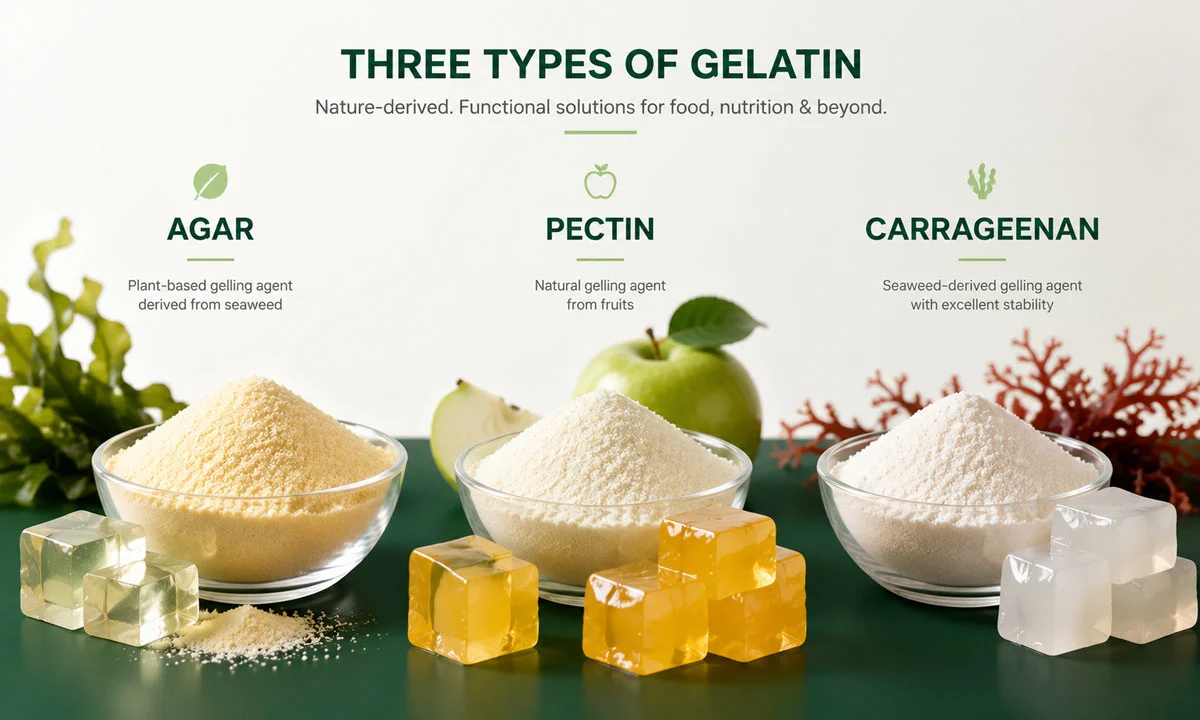
Although kosher gelatin may meet certain religious requirements, it does not meet vegetarian or vegan requirements.
For brands developing plant-based products, gelatin alternatives should be evaluated separately.
If you are sourcing plant-based collagen, Hengxin can supply high-quality rice peptides and pea peptides. You can also read our article on the applications, market trends, and production requirements of vegan protein peptides.
Bone gelatin requires strict raw material control because the quality and compliance of the final product depend on the source of the bones.
Before purchasing bone gelatin, buyers should confirm:
l Raw Material Documentation: The supplier should provide information about: Animal species, Source region and Processing records.
l Certification: Confirm, Kosher certification, Halal certification if required and Quality system certification
l Batch Testing: Review, Gel strength, Viscosity, Microbial results and Chemical analysis
A transparent supplier helps buyers reduce compliance risks and improve product consistency.
Choosing the right gelatin requires understanding the differences between raw material sources, certification requirements, and application performance.
The following comparison helps buyers evaluate different gelatin options based on common business requirements.
| Feature | Pigskin Gelatin | Bovine Gelatin | Bone Gelatin |
| Raw Material | Porcine skin | Bovine hide or bovine connective tissue | Bones(cow, pig or chicken) |
| Main Protein Source | Collagen | Collagen | Collagen |
| Common Applications | Food, capsules | Pharmaceuticals, supplements, food | Pharmaceuticals, food, technical applications |
| Halal Acceptance | No | Yes with proper certification | Yes with proper certification |
| Kosher Acceptance | Usually not accepted | Possible with certification | Possible with certification |
| Supply Consideration | Mature supply chain | Growing global demand | Requires stronger traceability |
| Key Buyer Concern | Market limitations | Certification and consistency | Raw material control |
There is no single "best" gelatin type for every application. The correct choice depends on the target market, product positioning, and technical requirements.
For example:
l A capsule manufacturer supplying global pharmaceutical markets may prefer bovine gelatin because of its wider acceptance.
l A food company producing products for Muslim consumers may require halal bovine gelatin.
l A company targeting specific religious markets may need certified kosher gelatin.
Gelatin is valued because it provides multiple functional properties in different industries. Its ability to form gels, stabilize structures, create films, and bind ingredients makes it useful across many applications.
Food Industry Applications: The food industry is one of the largest markets for gelatin.
Gelatin is commonly used in:
l Gummies
l Marshmallows
l Dairy desserts
l Jelly products
l Protein snacks
l Confectionery products
In food manufacturing, gelatin helps improve texture, mouthfeel, stability and product structure.
For food companies, the choice of gelatin depends on the final product requirements.
For example:
l A gummy manufacturer may focus on gel strength and melting behavior.
l A dairy manufacturer may focus on texture stability and compatibility with other ingredients.
Pharmaceutical Gelatin Applications: Pharmaceutical gelatin plays an important role in capsule manufacturing.
It is widely used for:
l Hard capsules
l Soft capsules
l Drug delivery systems
For pharmaceutical applications, consistent batch performance is critical. Small variations in gelatin properties may affect capsule production efficiency. Pharmaceutical buyers usually require technical documents, quality reports, and supplier validation before long-term cooperation.
Gelatin Applications in Cosmetics and Personal Care: Gelatin and collagen-derived ingredients are also used in personal care products.
Applications include:
l Skin care formulations
l Film-forming products
l Beauty supplements
Gelatin provides protein-based functional properties that can support product formulation.
As a cosmetic brand, factors such as purity, appearance, odor, and traceability are important when selecting suppliers.
Industrial Applications of Gelatin: Besides food and pharmaceutical applications, gelatin is also used in technical industries.
Industrial buyers often focus on:
l Cost efficiency
l Functional performance
l Supply stability
l Customized specifications
Different industries require different gelatin grades. A qualified manufacturer should provide technical support to match gelatin properties with specific applications.
Selecting gelatin is not only about choosing the source. B2B buyers also need to select the correct grade according to product requirements.
The main evaluation factors include:
l Bloom Strength: Measures the firmness of the gelatin gel. Higher Bloom strength generally creates stronger gels. Different applications require different Bloom levels.
l Viscosity: It affects how gelatin behaves during processing. It influences flow characteristics coating performance and capsule manufacturing efficiency. A supplier should provide viscosity data according to standardized testing methods.
l Particle Size: Fine gelatin powder usually improves dispersion during production.
l Color and Odor: That can influence the final product experience. For applications such as transparent capsules or clear food products, appearance control is especially important.
l Certification Requirements: Before selecting gelatin, buyers should confirm target market requirements, halal needs, kosher certification needs and regulatory documentation. Choosing the wrong gelatin source may create problems during product registration or market expansion.
Selecting a gelatin supplier is a long-term business decision. A qualified manufacturer should provide more than a product price.
Buyers can evaluate and verify from these dimensions:
l Raw material control
l Manufacturing capability
l Quality management
l Technical support
l Supply stability
When selecting a reliable ingredient partner, manufacturing experience, quality consistency, and technical support are key considerations. Since 2005, hxpdgelatin has established partnerships with customers worldwide in the food, pharmaceutical, and nutrition industries, providing gelatin and collagen peptide solutions supported by professional production capabilities. To learn more about our solutions or discuss your project requirements, please contact our team.

To confirm whether gelatin is halal, buyers should check three key areas:
Raw Material Source: The gelatin should come from halal-approved animal sources.
Bovine gelatin can be halal when the animal source and supply chain meet halal requirements.
Production Process: The manufacturing process should follow halal control requirements.
This includes:
l Raw material handling
l Production equipment control
l Storage management
Certification: A valid halal certificate provides official confirmation.
Buyers should request certification documents directly from suppliers.
Kosher gelatin is gelatin produced according to Jewish dietary requirements.
Halal and kosher are different certification systems.
Some gelatin products may meet both requirements, but buyers should verify each certification separately.
A product with kosher certification does not automatically mean it is halal.
The supplier should provide clear certification documents based on the target market.
Selecting gelatin for pharmaceutical capsules depends on several factors, including capsule type, application requirements, market regulations, and quality specifications.
For hard capsule manufacturing, bovine and porcine gelatin are commonly used due to their excellent film-forming properties, mechanical strength, and compatibility with capsule production processes.
Manufacturers typically evaluate key parameters such as Bloom strength, viscosity, moisture content, microbial limits, and batch-to-batch consistency when selecting gelatin.
In addition, factors such as raw material origin, certification requirements, and consumer preferences should be considered to ensure the gelatin meets the needs of the target market.
Bovine gelatin can be suitable for halal markets when it is produced from halal-approved bovine sources and processed according to recognized halal requirements.
For manufacturers supplying halal markets, selecting bovine gelatin is only one part of the evaluation process. Companies should also verify the entire supply chain, including raw material sourcing, production processes, handling procedures, and halal certification documentation.
Halal gelatin requirements may vary depending on regional regulations and certification organizations. Therefore, pharmaceutical, food, and nutraceutical manufacturers should work with suppliers who can provide appropriate certification support and complete traceability information.