In the highly competitive landscape of industrial food, pharmaceutical, and nutraceutical manufacturing, selecting the right functional ingredients is the cornerstone of product success. Among the most versatile and widely utilized hydrocolloids in the global market is bovine gelatin.Whether it is providing the perfect elastic bite in a gummy vitamin, ensuring the structural integrity of a pharmaceutical softgel, or delivering a smooth, creamy texture in dairy products, bovine gelatin is an indispensable component. But what exactly is bovine gelatin? How does its molecular structure give it such unique functional properties, and why do global manufacturers prefer it over other gelling agents?In this comprehensive guide, we will explore the definition, scientific composition, advanced manufacturing processes, and industrial applications of bovine gelatin, providing R&D teams and purchasing managers with the insights needed to optimize their supply chains.
What Is Bovine Gelatin?
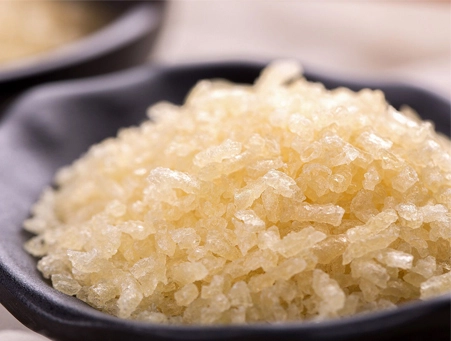
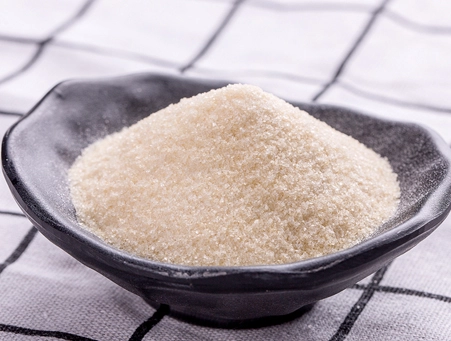
Bovine gelatin is a protein-based ingredient derived from collagen found in cattle. It is produced through the partial hydrolysis of bovine connective tissues such as skin, bones, and hides.It is widely used in the food, pharmaceutical, and nutraceutical industries due to its excellent gelling, stabilizing, and water-binding properties. When dissolved in hot water and subsequently cooled, bovine gelatin forms a semi-solid, transparent gel that is thermo-reversible, meaning it melts seamlessly at human body temperature.Unlike synthetic additives or chemically modified texturizers, bovine gelatin is a natural biopolymer derived exclusively from animal collagen. It is widely recognized as a highly functional, clean-label ingredient rather than just a simple food additive. Because it is highly digestible and naturally rich in essential amino acids, it aligns perfectly with modern consumer demands for transparent and health-conscious product formulations.
What Is Bovine Gelatin Made Of?
Understanding exactly what bovine gelatin is made of requires looking at the raw materials and the underlying biochemistry. Formulators often ask, what is bovine gelatin made from? At its core, bovine gelatin is made of collagen proteins—primarily Type I and Type III collagen.In industrial manufacturing, these high-quality collagen proteins are extracted from three main sources:- Cattle Hides (Primary Source): The inner layer of bovine skin, known as the split, is exceptionally rich in collagen. This is the most common raw material used in large-scale gelatin production, yielding a product with outstanding clarity and high gel strength.
- Bones (Secondary Source): Crushed and demineralized bovine bones (ossein) provide a highly stable collagen matrix. Gelatin derived from bones is often utilized in pharmaceutical applications, such as hard capsule manufacturing, due to its durable film-forming properties.
- Connective Tissues: Tendons and ligaments are fibrous tissues that also contribute to the collagen pool, supporting the overall viscosity and structural integrity of the final gelatin product.
From a scientific perspective, collagen is a robust structural protein composed of a unique sequence of amino acids—most notably glycine, proline, and hydroxyproline. In its natural state, collagen forms a tight, insoluble triple-helix structure. During the industrial manufacturing process, this rigid structure is carefully broken down (denatured) into gelatin through controlled hydrolysis, rendering it soluble in warm water and highly functional.
Raw Material Sources & Composition
| Cattle Hide | High collagen content | Main industrial source for versatile uses |
| Bones (Ossein) | Mineral + collagen matrix | Provides high strength & rigid gel structure |
| Connective Tissue | Fibrous protein network | Supports viscosity and elasticity |
How Is Bovine Gelatin Made?
The transformation from raw bovine hides and bones into a highly purified, functional gelatin powder is a marvel of biochemical engineering. For B2B buyers evaluating a bovine gelatin supplier, understanding this intricate process is essential for verifying E-E-A-T (Expertise, Experience, Authoritativeness, Trustworthiness) and ensuring supply chain safety.Step 1: Raw Material Selection
The process begins long before the materials reach the factory. Only high-quality bovine hides and bones from approved, disease-free herds are selected. Top-tier manufacturers enforce rigorous supplier auditing to ensure full traceability, veterinary inspection, and compliance with global food safety and pharmaceutical standards.Step 2: Pretreatment
Because collagen is naturally bound with fats, minerals, and other non-collagenous proteins, the raw materials must undergo extensive pretreatment. The hides or bones are first degreased and thoroughly cleaned. They are then subjected to a prolonged alkaline or acid treatment. This vital step causes the collagen matrix to swell, gently breaking the intermolecular bonds and removing unwanted impurities without damaging the core protein structure.Step 3: Collagen Extraction
Once pretreated, the materials are moved into large extraction vessels. The collagen is extracted through a process of controlled hot water hydrolysis. By gradually increasing the temperature across multiple extraction cycles, the insoluble collagen is successfully denatured and converted into a soluble gelatin liquor.Step 4: Filtration & Purification
To achieve the pristine clarity required for clear gummies or pharmaceutical capsules, the gelatin solution undergoes multi-stage filtration. High-tech centrifugation and microfiltration systems meticulously remove any residual fats, fine fibers, and trace minerals, resulting in an exceptionally pure liquid.Step 5: Sterilization & Drying
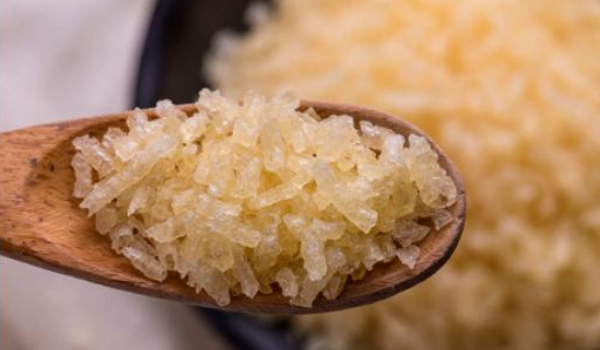
Food safety is paramount. The purified gelatin solution is subjected to Ultra-High Temperature (UHT) sterilization to eliminate any microbiological risks. Following sterilization, the liquid is concentrated under a vacuum and fed into an extrusion and drying tunnel. Here, carefully filtered, temperature-controlled air gently removes moisture, producing dry, stable gelatin noodles or sheets.Step 6: Milling & Standardization
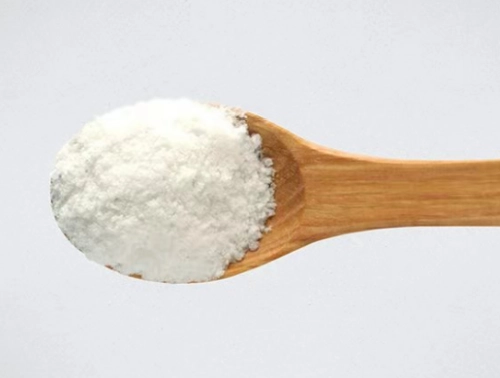
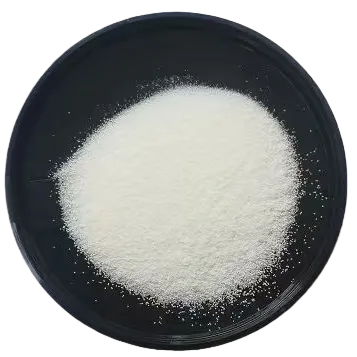
In the final step, the dried gelatin is milled into a fine, uniform powder. Because different industrial applications require different performance metrics, the powder is rigorously tested and standardized to achieve a specific Bloom strength (gel firmness) and particle size (mesh), ensuring consistent batch-to-batch performance for the end-user.
What Is Bovine Gelatin Used For?
The industrial versatility of bovine gelatin is unmatched. It is heavily utilized as a multifunctional ingredient across a wide array of manufacturing sectors due to its unique physicochemical properties.Food Industry Applications
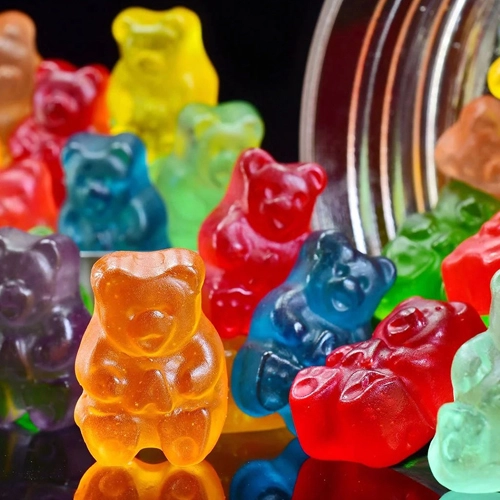
In food processing, bovine gelatin is prized for its ability to create brilliant textures and stabilize complex formulations.- Gummies & Confectionery: It provides the signature elastic, chewy bite and transparent appearance that synthetic alternatives like pectin cannot replicate perfectly.
- Marshmallows: Acts as a powerful whipping agent, stabilizing the aerated foam structure to prevent collapse.
- Yogurt & Dairy Stabilizers: Prevents syneresis (whey separation) in yogurts, mousses, and sour creams, delivering a luxurious, smooth mouthfeel.
- Desserts: Facilitates the setting of panna cottas, jellies, and cream-based desserts.
Pharmaceutical Applications
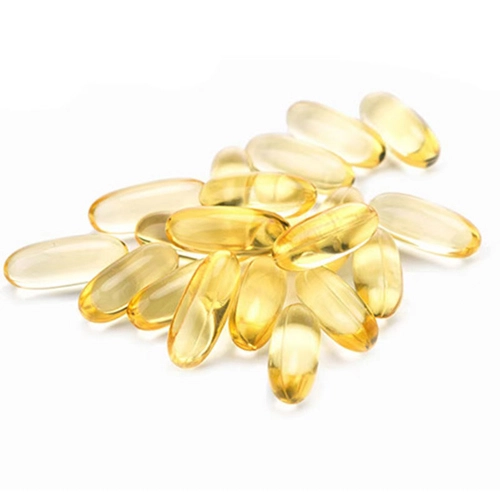
The pharmaceutical industry relies heavily on high-Bloom bovine gelatin due to its safety, digestibility, and structural resilience.- Capsule Shells: It is the primary film-forming agent used in manufacturing both two-piece hard capsules and liquid-filled softgels.
- Drug Encapsulation: Protects active pharmaceutical ingredients (APIs) from light, oxygen, and degradation, thereby extending shelf life.
- Tablet Coating & Binding: Serves as a highly effective binder in tablet formulations, ensuring proper dissolution rates in the human digestive tract.
Nutraceutical Applications
With the booming health and wellness market, bovine gelatin has found massive success in functional nutrition.- Collagen Supplements: Often further processed into hydrolyzed collagen peptides for skin, hair, and joint health products.
- Protein Blends: Used as a highly digestible, clean-label protein source in nutritional bars and shakes.
- Functional Foods: Incorporated into fortified gummies that deliver vitamins, minerals, and botanical extracts.
Why Choose Hengxin Bio as Your Bovine Gelatin Supplier
As a globally leading manufacturer of gelatin and collagen peptides, Hengxin Bio provides premium, high-quality bovine gelatin powder for the food, nutraceutical, and pharmaceutical industries worldwide. Partnering with the right supplier is about more than just purchasing ingredients; it is about securing your supply chain and elevating your product quality.Advanced Manufacturing Capability
Hengxin Bio operates state-of-the-art facilities equipped with enormous production capacities, guaranteeing a stable bulk supply even amid global market fluctuations. Our unyielding strict quality control systems ensure that every batch of gelatin meets international pharmacopeial and food safety standards.Innovation-Driven R&D
We do not just manufacture; we innovate. Backed by more than 30 active patents and an elite, innovation-driven R&D center, Hengxin Bio provides unparalleled formulation support. Whether you need precise viscosity control for softgel encapsulation or customized Bloom specifications for a novel gummy texture, our technical engineers are ready to assist.
 zh-CN
zh-CN